


Choosing the right projection screen is just as crucial as selecting the right projector—especially in modern living spaces where ambient light is often a challenge. At NothingProjector, we developed the Black Series CLR screen to meet the growing demand for high-performance, ultra-short-throw projection in real-world environments. This guide offers a deep dive into the technology, construction, and professional test results behind our screen, helping you understand what truly makes a premium viewing experience.
Technical Screen Features Overview
In the field of projection display, the choice of technical screens has a direct impact on the viewing experience. Currently, there are two main types of technical screens on the market, each with distinct optical characteristics and applicable scenarios.
Type One: Brightness-Enhancing Screens
This category focuses on dynamically boosting image brightness and typically features a gain greater than 1. It effectively enhances the image brightness of low-lumen projectors and is suitable for older models or environments with higher ambient light. However, this boost often comes at the cost of black level performance. While the image appears brighter, the depth of dark areas is compromised—starry skies in night or space scenes can appear washed out.
Type Two: Contrast-Enhancing Screens
Screens in this category take a different design approach, usually with a gain between 0.6 and 0.9. They employ a gray coating with multiple metallic particle layers on a PVC substrate to significantly improve perceived image contrast. This structure suppresses ambient light interference while enabling precise light reflection. However, it may result in some loss in dynamic range and is better suited for high-lumen projectors with lower native contrast.
The performance of these screens heavily relies on manufacturing precision. If the gray base is too dark, it improves black levels but requires higher gain to compensate for brightness, which may lead to a narrower viewing angle or hotspotting. If it's too light, brightness is preserved but dark scene details suffer. We found that controlling the density and distribution of metallic particles is key to balancing brightness and black levels, which demands extremely high manufacturing accuracy.
Another critical parameter is the "half-gain angle," which better reflects real-world screen performance across viewing angles than peak gain. A high-quality screen should maintain consistent image quality within a 30–60° viewing angle to ensure a good experience for all viewers. If the angle is too narrow, only those seated directly in front will see the optimal image—unsuitable for shared spaces like home theaters.

Manufacturers' claimed gain values are often measured under ideal conditions. In actual use, factors such as installation angle and ambient light will affect performance. Therefore, buyers should not focus solely on specs but instead consider real-world performance.
What is a CLR Screen?
CLR (Ceiling Light Rejecting) screens are designed specifically for ultra-short throw projectors. They incorporate thousands of micro horizontal louvers angled at 45° to reflect light from below (the projector) while blocking overhead ambient light, significantly enhancing image contrast. This makes them ideal for bright living room environments, delivering a cinema-like experience.
Nothingprojector screen and Formovie Cinema 3

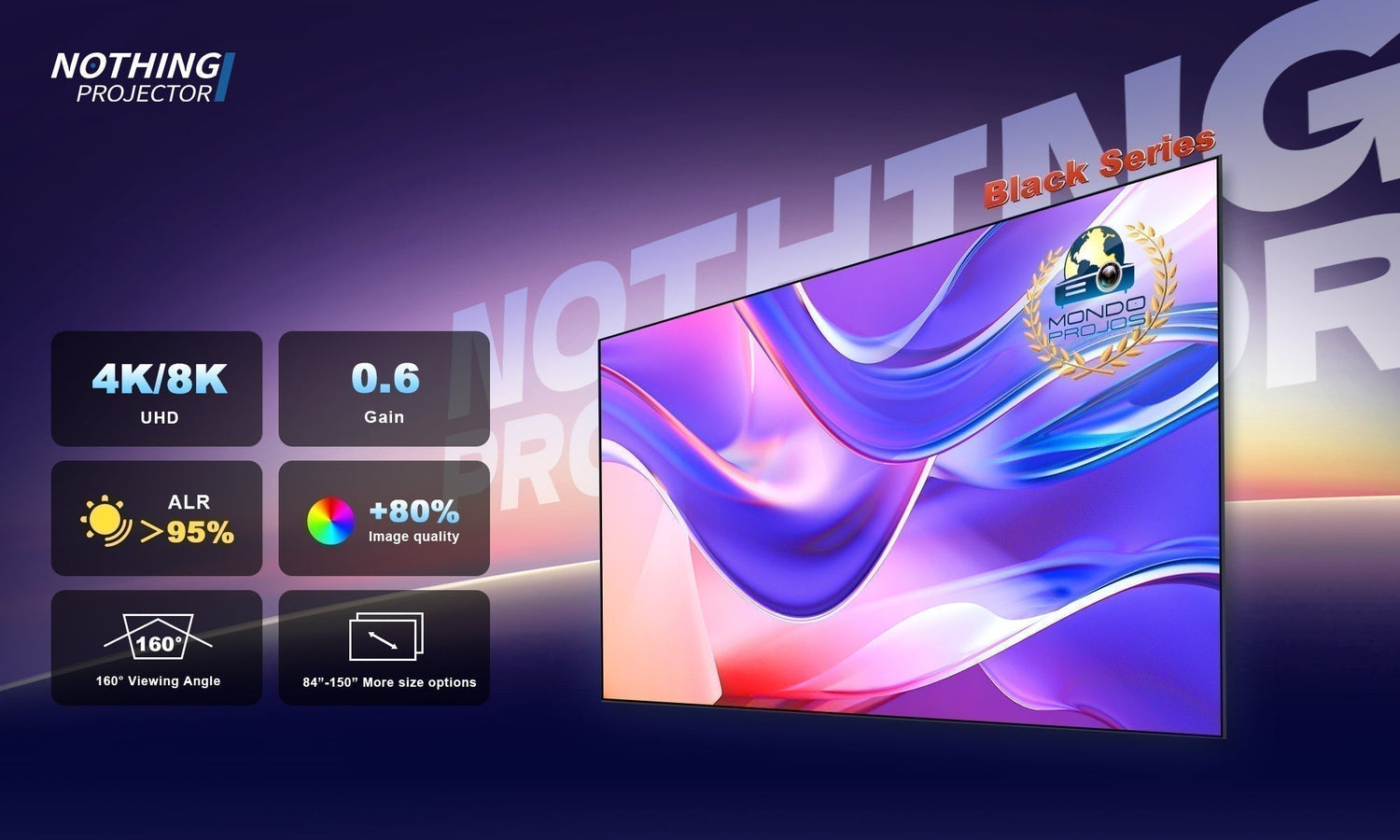
The Black Series screen from NothingProjector uses a specialized serrated optical structure that not only directs light precisely but also enhances black level performance, creating deeper shadows. The surface appears visually black, maintaining image clarity across various lighting conditions.
NothingProjector Black Series CLR Screen

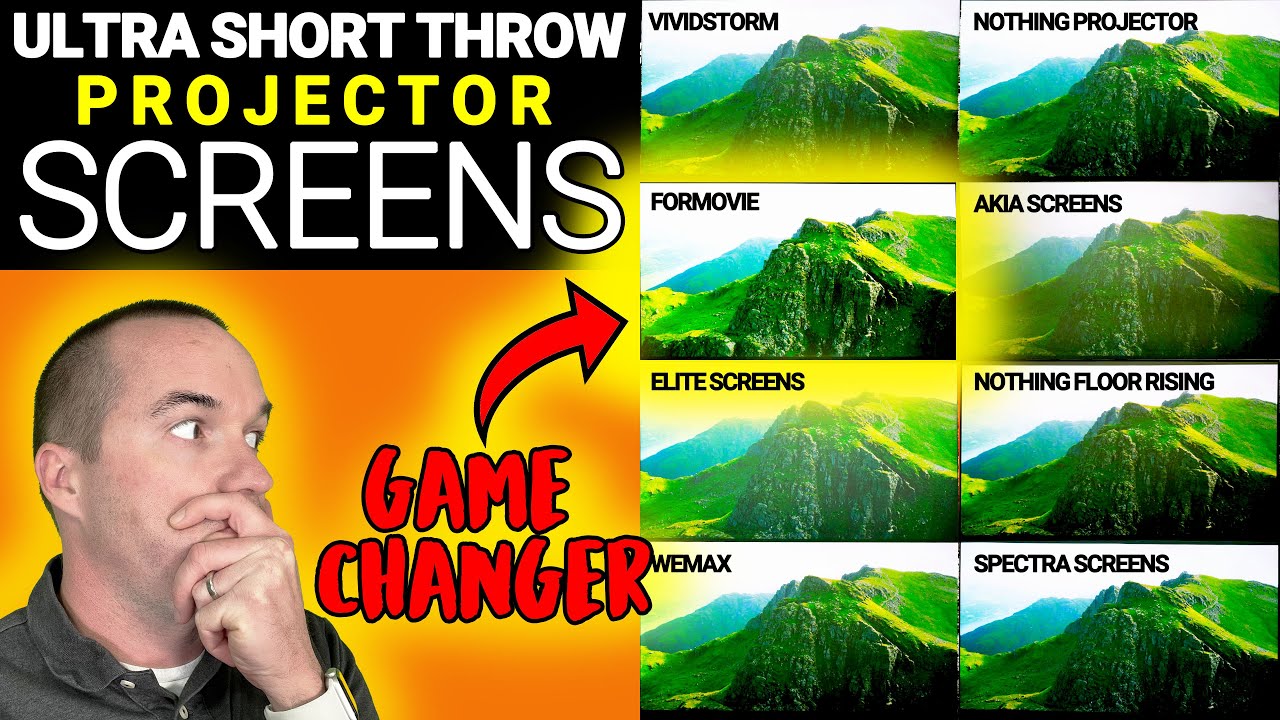
Compared to the Vividstorm CLR screen—which has a generally gray surface and a different grayscale strategy—the Black Series offers lower brightness but improved black level performance. A more detailed comparison of grayscale response and image quality will follow in the “Technical Conclusions” section. Note: CLR screens are designed for bright, uncontrolled lighting environments. In completely dark rooms (e.g., with black walls), their advantages are less apparent. However, in everyday spaces like living rooms, they can significantly enhance the viewing experience.
Black Series Floor-Rising Screen: Physical Design
-
Structure and Dimensions
NothingProjector’s 100-inch motorized screen comes in a durable black metal casing (white available), measuring approximately 2.5 m in length, 16.5 cm in width, and 12 cm in height—comparable to Vividstorm, though the latter is slightly lighter and more compact (approx. 2.45 m × 16 cm). The base includes two movable support plates for floor stability—handle with care during transport.
Comparison of NothingProjector and Vividstorm Frame
-
Installation Flexibility
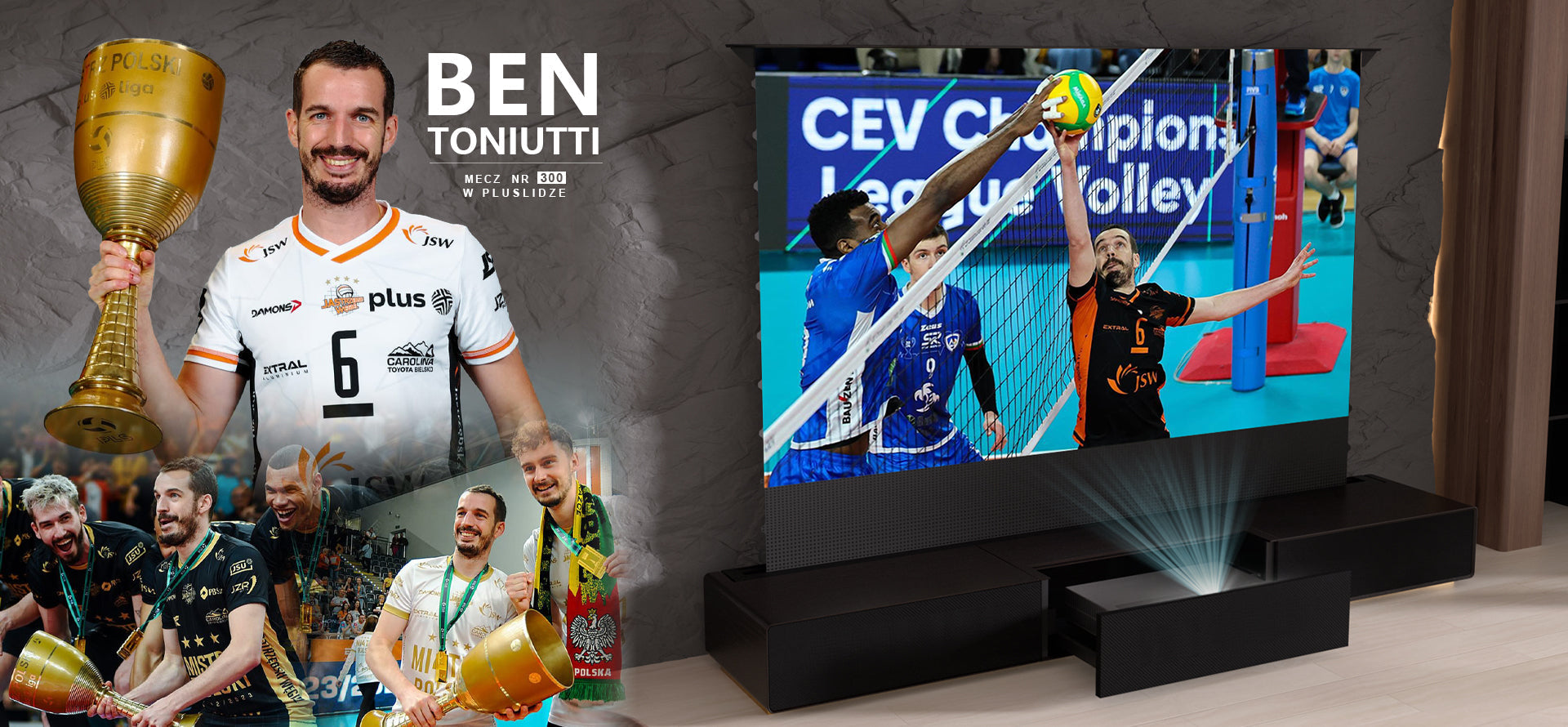
This screen requires no ceiling mounting, ideal for users who prefer not to drill into walls. Simply place it in the desired location, plug it in, pair it with an ultra-short throw projector, and enjoy a flexible viewing setup that can be moved between rooms. Adjustable rear linkage supports the screen during operation and allows for compact storage when retracted. -
Remote Control & Position Adjustment
NothingProjector uses RF remote control, enabling non-line-of-sight operation from anywhere in the room. Unlike Vividstorm’s manual rod height adjustment, our model allows limit setting directly via remote for precise, convenient control.
NothingProjector RF Screen Remote Control

-
Safety Mechanism
The screen includes an anti-pinch mechanism: when placed on a frame, screen movement stops upon contact with obstacles, effectively preventing injury.
-
Tensioning System
Equipped with an advanced tensioning system, the screen remains flat and stable once raised, eliminating waves or bends and ensuring accurate image presentation.
Technical Screen Fabric Technical Test Conditions
To objectively evaluate the performance of the Black Series floor-rising screen, we invited renowned AV expert Greg for a professional test.
Testing Setup:
Two 100-inch screens were used—one Vividstorm CLR and one neutral white screen (reference). The projector was a Formovie C3 ultra-short throw laser model.
Measurement Tools:
-
Klein K10A colorimeter
- Jeti 1501 Hi Res spectroradiomete
Both are industry-leading in precision and reliability, particularly suitable for calibrating laser projectors.
Klein 10A Formovie and Vividstorm white screen

The projector was first calibrated to D65 white point on the white screen, then recalibrated on the NothingProjector screen to assess differences in color space, saturation, and grayscale performance.
Test Conditions Test Results Summary
To comprehensively evaluate the Black Series CLR screen, Greg compared its performance against a standard white screen across key image parameters:
-
Brightness & Gain
The screen achieved a center peak brightness of 34 cd/m² (white screen: 31), with 29 cd/m² at the edges (white screen: 27). Measured gain was approximately 1.1 in the center, tapering to 0.93 at the edges—higher than the typical theoretical value (0.6) for black screens, indicating enhanced contrast without major brightness loss.
Gamma 2 Comparison

-
Viewing Angle
Despite some peripheral brightness drop-off, the screen offers an excellent practical viewing angle of 180°, exceeding the claimed 170°.
180° viewing angle without loss

-
Color & Grayscale Accuracy
After D65 calibration, the screen achieved a color temperature of 6488K with deltaE of 3.8, compared to 6693K and 3.0 for the white screen. RGB analysis showed slight blue attenuation, which can be balanced by adjusting the red channel. Color gamut and saturation were unaffected, aligning with high-end CLR screens.

-
Contrast & ANSI Luminance
The CLR material effectively blocked ambient light, raising static contrast to 2081:1 (white screen: 1901:1) and ANSI luminance from 50 to 84, improving shadow detail and image clarity. The gamma curve held steady at 2.2, ensuring rich tonal range and natural dynamic transitions.
Comparaison Gamma 1

-
Uniformity & Glitter Control
No visible hot spots or glitter effects were detected, reflecting a high-precision surface treatment and excellent image uniformity.
-
Build Quality Comparison
Compared to three Vividstorm models, the NothingProjector screen showed superior craftsmanship—tighter structure, seamless casing when closed, and likely longer durability.
Fully closed Black Series screens in front, Vividstorm in back

-
Subjective Impressions
Footage from The Martian, The Shallows, and Prey showed that the screen delivered clear images even with lights on. In dark scenes like "SOL 517", high-contrast details were well preserved, while the white screen appeared washed out. The Black Series closely mimicked cinema-level performance, ideal for bright living rooms.
Image SOL 517 with lights off


Conclusion
For a high-quality projection screen, the accuracy and precision of red tones are among the most critical factors. In Greg’s professional evaluation, the Black Series screen performed exceptionally well in both areas, ranking among the top of its class.
Compared to competitors like Vividstorm, the screen is more competitively priced, offers finer adjustment capabilities, and features a minimalist hidden design that suits a variety of home settings.
We are pleased that this screen received positive feedback from industry expert Greg and was awarded the Mondoprojos Gold Award.
Highlights:
-
Excellent contrast and brightness balance
-
Effective ambient light rejection
-
Uniform surface for consistent color distribution
-
Matte finish with low reflectivity
-
Reasonable pricing
To explore more about the Black Series screen and see it in action, click the link below for full product details.