



For years, the home theater dream has been defined by one question: how big can my screen go without sacrificing picture quality? Plasma gave way to LCD, LCD gave way to OLED, and OLED gave way to ever-larger QLED panels. But even the most spectacular 85-inch OLED has a ceiling—literally and figuratively. Enter the laser television: a category that Hisense has not merely entered, but defined.
The short answer is yes—Hisense’s premium laser projectors can absolutely serve as high-end television replacements. But the longer answer is far more interesting. It involves a sixteen-year technological odyssey, a complete rethinking of what “television” means, and a product—the Hisense L9Q TriChroma Laser TV—that prestigious review sites and consumers alike are calling the new gold standard in home cinema.
The Sixteen-Year Journey: How Hisense Built a Laser Empire
2007–2013 – The Research Phase: Betting on a Vision
While the rest of the consumer electronics industry was chasing ever-thinner OLED panels, Hisense made a contrarian bet. In 2007, the company took the lead in entering the field of laser TV, securing support from China’s National 863 Program—a government-backed initiative for high-tech innovation. At the time, laser display was considered a technological frontier with no guaranteed commercial payoff.
The early years were grueling. Hisense endured seven years of investment with zero revenue—a period industry observers described as “starting from nothing”. A team of just over 50 researchers worked on laser display technology, navigating uncharted technical territory. By the end of 2011, the first prototype was completed. At CES 2012, Hisense’s laser display technology was demonstrated to the world for the first time—a moment Hisense’s Chief Scientist Huang Weiping described as the industry’s first glimpse of a “disruptive innovation” that would define the “post-LCD era”.
2014–2018 – Category Establishment and Explosive Growth
2014 marked the breakthrough: Hisense successfully launched the world’s first 100-inch ultra-short throw (UST) laser TV. This was the moment laser television transitioned from laboratory concept to consumer reality.
What followed was a rapid succession of industry firsts:
- 2014 – World’s first 100-inch UST laser TV
- 2015–2016 – 4K UST laser TV; ULED technology debut
- 2017 – First dual-color laser TV; World Cup sponsorship begins
- 2018 – 80-inch laser TV hits market—over 2,500 units sold in two months, becoming the CMM top-1 model
By the end of October 2018, Hisense had filed 503 laser projection patents, with 161 granted domestically and 82 patent applications in the United States and Europe.
But technology alone does not build a global brand. Hisense understood this intimately. In 2018, the company became an official sponsor of the FIFA World Cup—a move that would define its global marketing strategy for years to come. The World Cup platform gave Hisense unprecedented visibility in Western markets, transforming a Chinese electronics brand into a globally recognised name.
2019–2025 – High-End Deepening and Ecosystem Building
2019 was another inflection point. At CES, Hisense released the 70-inch TriChroma laser TV—the industry’s first application of three-color laser display technology in a consumer television. TriChroma technology produces all colours directly from red, green, and blue lasers without a colour wheel, achieving nearly 100% of the BT.2020 colour standard—a colour reproduction capability that industry experts regard as the “ultimate solution” for laser display.
The company continued to push boundaries:
- 2022 – Global laser TV shipment share reached 53.5%
- 2023 – 8K laser TV launched; cumulative patents exceeded 2,098
- 2024 – Rollable laser TV concept unveiled at CES; won CES 2024 Innovation Award
- 2025 – L9Q launched at CES 2025; IFA 2025 Best in Home Entertainment winner


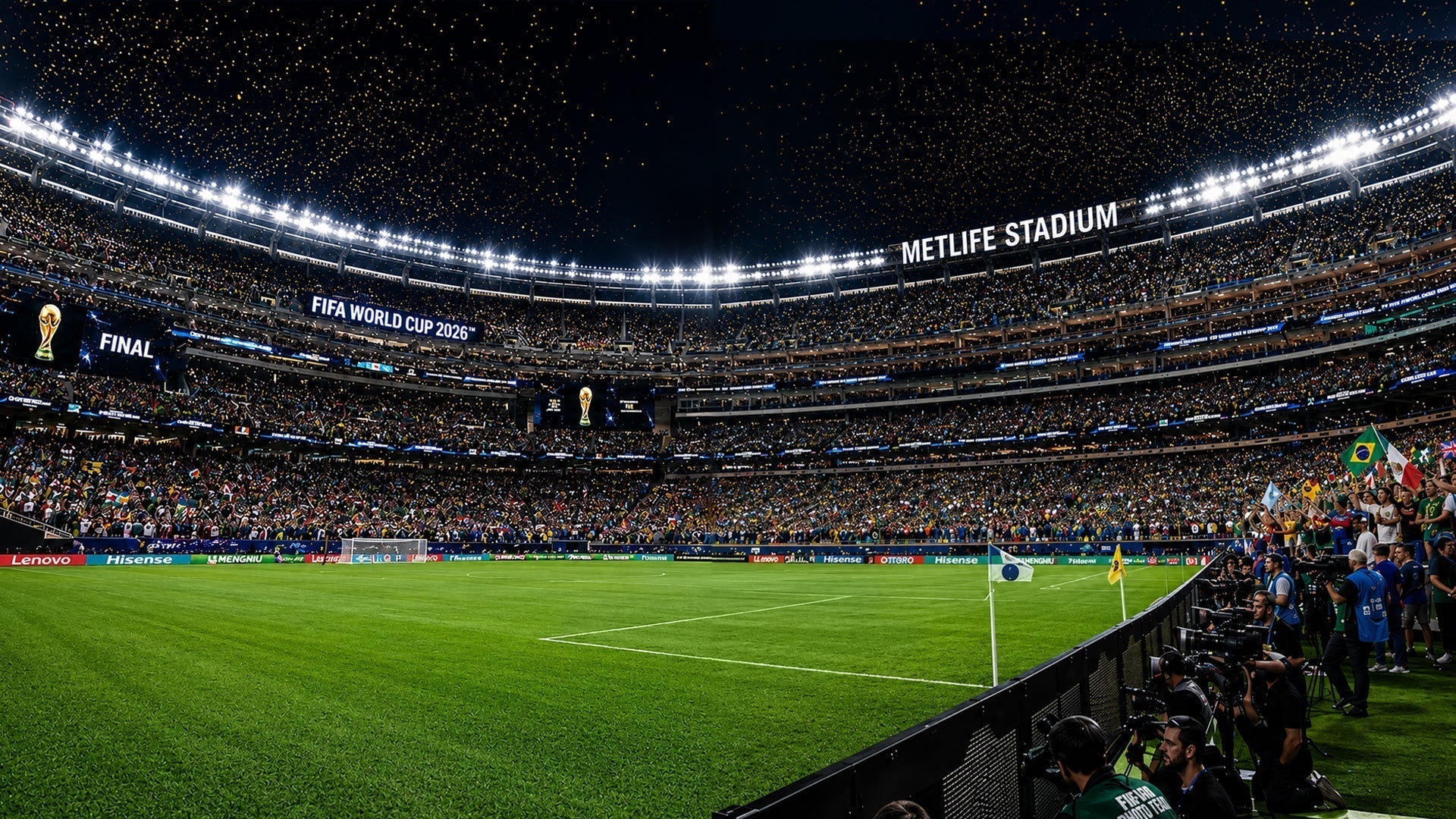
Hisense’s marketing evolved alongside its technology. After the 2018 World Cup, the company expanded its FIFA partnership to include FIFA+ content cooperation in 2022, and in 2025 secured sponsorship for the FIFA World Cup 2026. By 2026, FIFA Chief Business Officer Romy Gai confirmed that Hisense and FIFA were exploring new frontiers in high-definition football content using advanced display technologies.
The results speak for themselves: according to Omdia, Hisense ranked No. 1 globally in laser TV shipments every year from 2019 through the first half of 2025, holding a 70.0% volume share in H1 2025. From January to August 2025, Hisense Laser products achieved 85% sales growth and 64% revenue growth in overseas markets excluding China and Japan. In Q3 2025, Hisense captured 68.9% of global laser TV shipments. The company has now maintained the top global position in laser TV for seven consecutive years.
The Current Landscape: Hisense’s Laser TV Lineup and Market Positioning
Hisense’s current laser TV portfolio spans multiple tiers, but all share core DNA:
- TriChroma triple-laser technology – Unlike single-laser or phosphor-based systems, Hisense’s RGB triple-laser engines generate red, green, and blue light directly, delivering wider colour gamuts and superior colour accuracy.
- Ultra-short throw (UST) – Projectors sit inches from the screen, eliminating the need for ceiling mounting or complex installations.
- Eye safety – Hisense laser TVs have earned TÜV Rheinland Low Blue Light and Flicker-Free certifications. Independent testing confirmed that the blue light spectrum emitted by Hisense laser products is concentrated in the 459–471 nm range, effectively avoiding the potentially harmful 415–445 nm band.
- ALR screen integration – Most models ship with ambient light rejecting screens that maintain image quality even in bright rooms.
Market performance – the numbers
Hisense’s dominance is not anecdotal—it is statistical:
- Global laser TV market share (2025): 70.3%
- 100-inch+ TV segment (Q3 2025): 56.6% shipment share
- Overseas growth (Jan–Aug 2025): 85% sales growth, 64% revenue growth
- U.S. market (2022): 107% year-over-year sales growth

Competitive landscape – Hisense vs. XGIMI and JMGO
While Hisense dominates the laser television category, other Chinese brands—notably XGIMI and JMGO—have taken different paths to global markets.
XGIMI has built its international strategy around social media and direct-to-consumer marketing. The brand invests heavily in immersive content that showcases product functionality and lifestyle integration, targeting younger, tech-savvy consumers through platforms like YouTube and Instagram. XGIMI’s channel strategy focuses on B2C e-commerce and premium retail partnerships, positioning itself as a lifestyle brand rather than a traditional electronics manufacturer.
JMGO similarly emphasises online channels and community engagement, leveraging user-generated content and influencer partnerships to build brand affinity.
Hisense’s approach is fundamentally different. Rather than competing on price or social media buzz, Hisense has pursued a premium retail strategy that places its products alongside Samsung, Sony, and LG in flagship electronics stores. The company’s channel strategy is built on:
- Physical presence in premium retail environments
- World Cup sponsorships that build brand legitimacy at scale
- Technical certifications (IMAX Enhanced, Dolby Vision, Pantone Validation) that signal quality to discerning consumers
- Partnerships with luxury audio brands like Devialet
This is not a price-driven strategy. Hisense laser TVs average well over $3,000 in Western markets. The brand has consciously avoided the “cheap Chinese alternative” positioning, instead building a premium identity through technology leadership and authoritative certifications.
Why European and American Consumers Are Embracing Hisense Laser TVs
The adoption of Hisense laser TVs in Western markets is not accidental. Five key drivers—all anchored in the trinity of technology defining experience, premium cognitive reconstruction, and channel trust endorsement—have created a non-price-driven global consensus.
1. Technology defines experience – eye safety as a competitive advantage
Western consumers, particularly families with children, are increasingly concerned about blue light exposure from screens. Hisense has turned this concern into a competitive advantage.
The company’s RGB three-colour laser light source physically avoids the 415–455 nm harmful blue light band. In September 2024, Hisense’s PX3 Series Laser Cinema was awarded TÜV Rheinland Low Blue Light (Hardware Solution) certification. The certification process included comprehensive spectral analysis and colour gamut assessment.
This is not marketing fluff—it is source-level safety. The blue light spectrum emitted by Hisense laser products is concentrated in the 459–471 nm range, which research has identified as safer for prolonged viewing. For European consumers who prioritise health and wellness, this is a compelling differentiator.
2. Premium cognitive reconstruction – authority awards build “technology leader” status
Hisense has never relied on price penetration in Western markets. Instead, the company has built its brand through international awards and certifications that signal technological leadership.
Key awards and recognition:
- Red Dot Design Award (2024) – for the L9Q design
- iF Design Award (2025) – for the L9Q design
- IFA Innovation Awards – Best in Home Entertainment (2025) – for the L9Q Laser TV
- CES Innovation Award (2024) – for the In-Vehicle Projection System
- IFA Gold Award – Large Screen Display Technology (2024) – for the 100-inch laser TV lineup
The L9Q’s IFA 2025 win was particularly significant—it was praised specifically for its “ultra-short throw design, vivid colour reproduction, and theatre-grade viewing that brings an immersive cinematic experience at home”. This was not a participation trophy; it was recognition from Europe’s premier consumer electronics show that Hisense had achieved something genuinely innovative.
3. Channel trust endorsement – side-by-side with Samsung and LG
Perhaps the most powerful driver of Western consumer acceptance is where Hisense laser TVs are sold.
In premium electronics retailers across Europe and North America, Hisense laser TVs are displayed alongside Samsung, Sony, and LG. This is not accidental—it is a deliberate channel strategy. When a consumer walks into a store and sees a Hisense laser TV next to a Samsung QLED or an LG OLED, the comparison is direct and experiential.
Western consumers do not need to be told that Hisense is premium—they can see it. The image quality, the design, the ALR screen performance—all of it is evaluated in real time, side-by-side with established premium brands. This direct comparison experience is far more powerful than any advertising campaign.
4. Certification as a “global passport”
Hisense has systematically eliminated the “Chinese brand = low quality” stereotype through rigorous safety and compliance certifications:
- CE marking (European Conformity)
- ETL certification (North American electrical safety)
- FCC compliance (U.S. electromagnetic compatibility)
- TÜV Rheinland certifications (eye safety, flicker-free)
- IMAX Enhanced certification
- Pantone Validation and Pantone SkinTone Validation
These certifications serve as a global passport—they tell Western consumers that Hisense products meet or exceed the same rigorous standards as any European, American, or Japanese brand.
5. User demographics – high-income, high-education early adopters
Hisense’s Western customer base reveals a telling pattern. In France, purchasers are predominantly mid-to-high-income consumers who prioritise large screens and colour accuracy. In Germany, where laser TV sales grew 179% year-over-year in the first half of 2023, buyers are company executives, engineers, professors, and business professionals.
These are not price-sensitive consumers. They are discerning buyers who install laser TVs in living rooms and dedicated home theatres—and increasingly, in corporate meeting rooms. Hisense’s overseas annual user surveys confirm that “big screen, picture quality, cinema experience, and quality” are the primary reasons Western consumers choose laser TV.
The Hisense L9Q – A Flagship That Redefines Home Cinema
From “Alternative” to “Industry Benchmark”
The Hisense L9Q is not merely an incremental improvement—it represents a generational leap in ultra-short throw laser television technology. Launched at CES 2025, the L9Q has been hailed by global review sites and consumers alike as the new standard in home cinema.
Technical specifications – the numbers that matter
| Specification | Detail |
|---|---|
| Brightness | 5,000 ANSI lumens—approximately 66% brighter than the previous flagship |
| Contrast ratio | 5,000:1 native contrast |
| Colour gamut | 110% of BT.2020 colour space—industry-leading colour volume |
| Resolution | 4K UHD (3,840 × 2,160) via XPR pixel shifting |
| Throw ratio | 0.18—projects a 100-inch image from just 5.4 inches away |
| Screen size | 80 to 200 inches diagonal |
| Light source | RGB triple-laser (TriChroma) with 25,000-hour rated life |
| Audio | 6.2.2 channel system with 10 speakers, 116W, tuned by Devialet and Opéra de Paris |
| HDR support | Dolby Vision, HDR10+, HDR10, HLG |
| Smart platform | Google TV with Chromecast and AirPlay 2 support |

Technological breakthroughs
- LPU Digital Laser Engine 2.0 – Hisense’s latest-generation light engine uses red, green, and blue pure laser sources to achieve 110% BT.2020 coverage.
- Pantone Validation – The L9Q is Pantone Validated and Pantone SkinTone Validated, ensuring colours—especially skin tones—appear natural and accurate.
- IMAX Enhanced Certification – Factory-certified to deliver IMAX’s signature visuals and DTS audio.
- Devialet × Opéra de Paris Audio – A collaboration that brings Paris Opera-grade sound calibration to the home. The 6.2.2 system includes dual subwoofers and upfiring speakers for immersive 3D sound.
-
AI Picture Processor – A professional AI processor refines brightness and contrast in real time while eliminating visual noise.

Awards and certifications
- 2024 Red Dot Design Award
- 2025 iF Design Award
- IFA 2025 Innovation Awards – Best in Home Entertainment
- IMAX Enhanced Certification
- Dolby Vision Certification
- Pantone Validation and Pantone SkinTone Validation
- 2025 UST Projector Showdown – #1 in Mixed Room Use, Dedicated Theater, and Overall Picture Quality
The L9Q as a status symbol
In European and American high-end markets, the L9Q has transcended its utilitarian function to become a symbol of technological sophistication and lifestyle aspiration. The user base is concentrated among high-net-worth individuals with household incomes exceeding $100,000—consumers who view the L9Q not as a television, but as a design statement.
The design language reinforces this positioning. Inspired by the iconic circular lights of the Royal Opera House and the powerful acoustics of ancient Roman amphitheatres, the L9Q features a champagne-copper-and-black aesthetic with maple wood accents. This is not a device meant to be hidden—it is meant to be displayed.
Real-world performance – what the experts say
Authoritative reviewers have been unequivocal in their praise:
Real-world scenarios – the L9Q in action
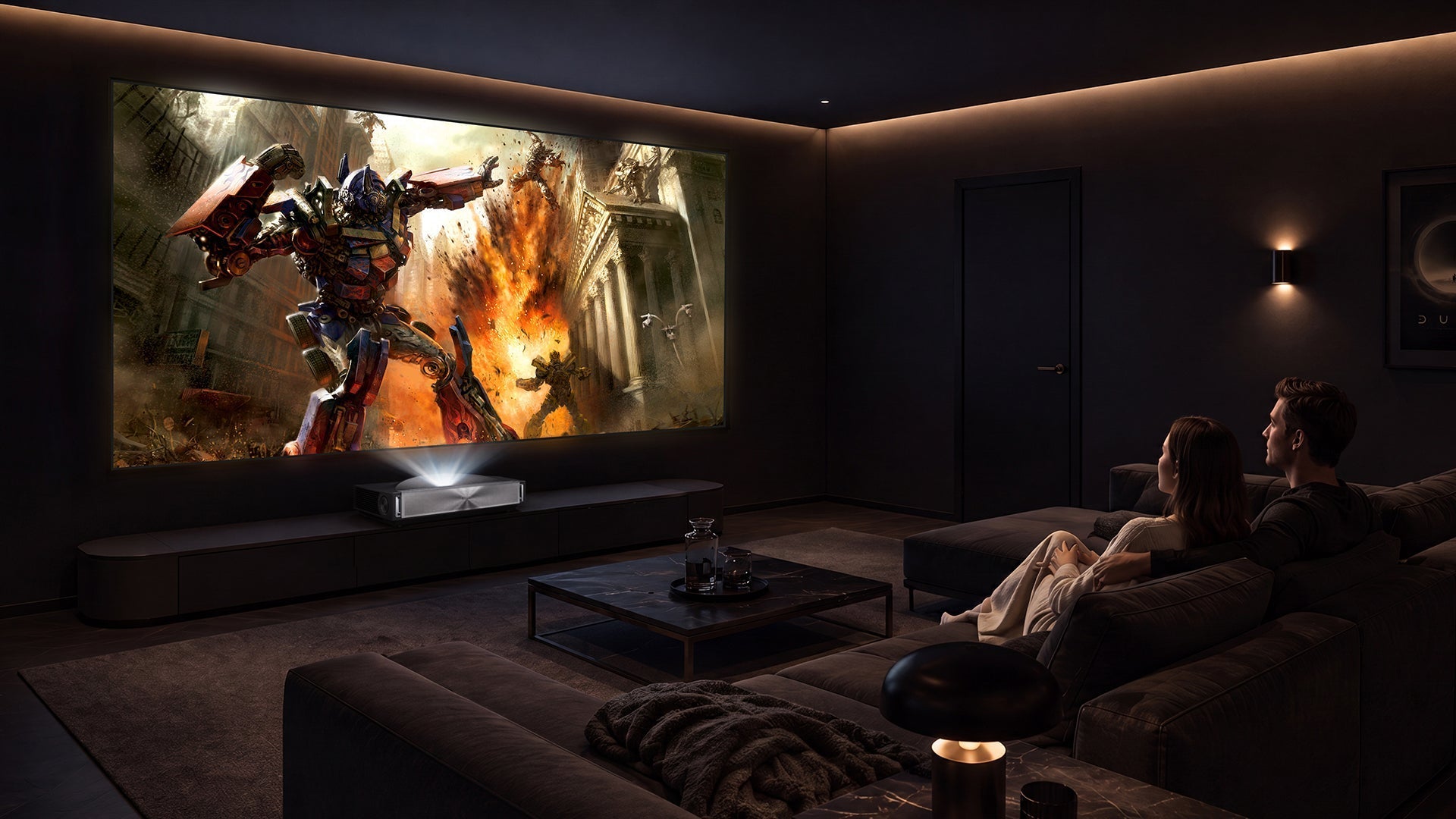
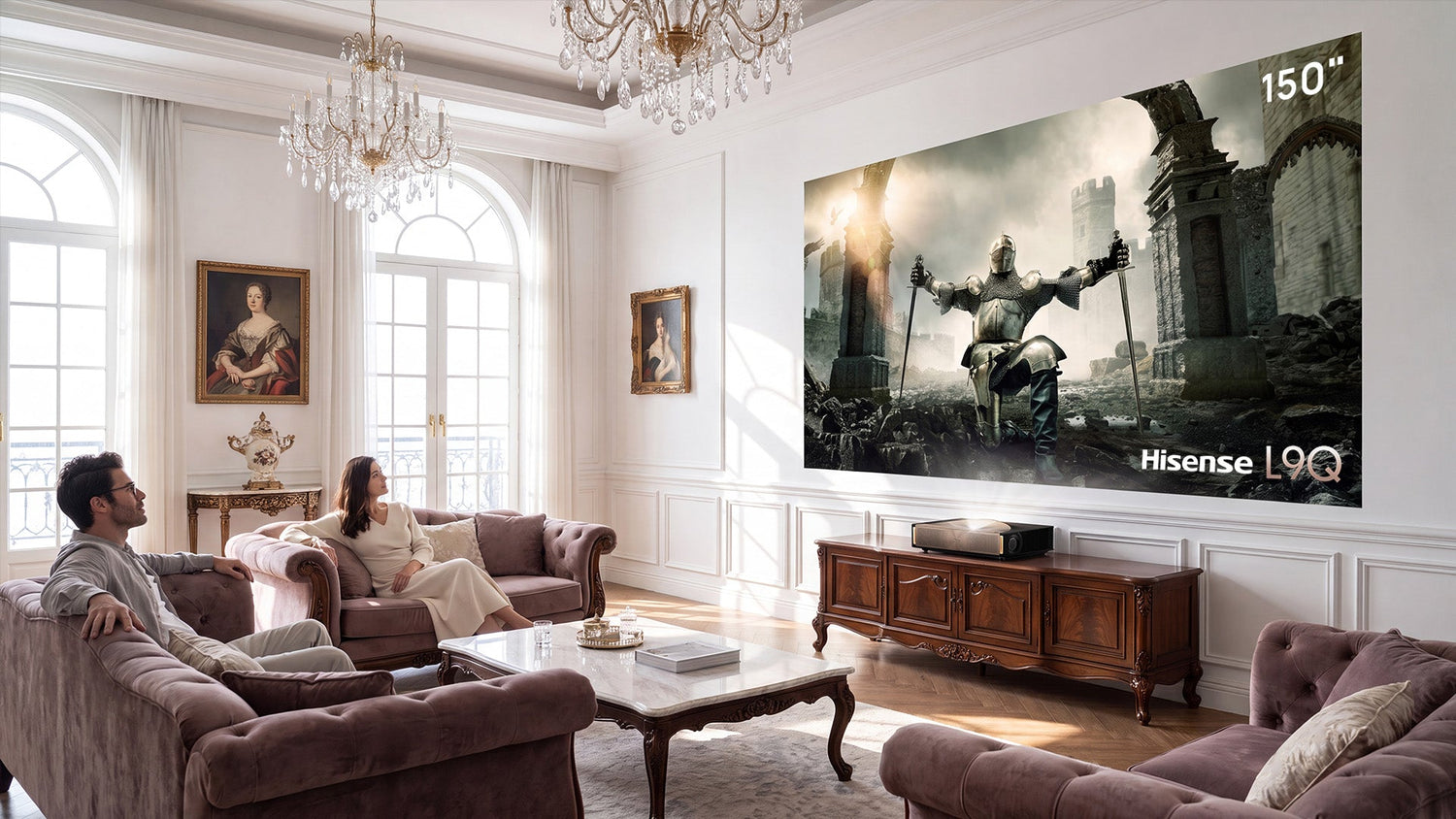
In a typical European or American home, the L9Q transforms ordinary evenings into cinematic experiences. The 0.18 throw ratio means the projector sits unobtrusively on a media console, projecting a massive image from inches away. The Devialet-tuned 6.2.2 audio system fills the room with immersive sound—no external soundbar required. And the ALR screen ensures that even with ambient light, the image remains vivid and detailed.
As one reviewer noted, “The Hisense L9Q short-throw projector perfectly nails the low-profile theatre room feel” and is “so bright that I have to bring it down a couple of notches to be comfortable”.
“Turned On, It’s an Opera House – Turned Off, It’s a Cinema”
Hisense’s tagline for its premium laser projectors— “Turned on, it’s an opera house; turned off, it’s a cinema” —is not mere marketing poetry. It is a technically achievable reality when paired with the right complementary products.
The complete home cinema solution
To transform any living space into a true home theatre, the L9Q should be paired with:
- The Shore RolaTV Rollable Laser Matte TV Cabinet – This innovative cabinet conceals the projector when not in use, maintaining clean aesthetics. When it is time to watch, the cabinet reveals the L9Q, creating a seamless transition from furniture to cinema.
- NothingProjector Floor-Rising ALR Motorized Projector Screen – A motorised ALR screen that rises from the floor when needed and retracts when not in use. The ALR technology rejects ambient light, ensuring that the L9Q’s 5,000 lumens and 110% BT.2020 colour gamut are displayed at their absolute best.

The result – a living space that transforms
With this combination, the living room becomes a dual-purpose space:
- During the day, the screen is retracted, the cabinet is closed, and the room functions as an elegant living space.
- At night, the screen rises, the L9Q activates, and the room transforms into a 200-inch cinema with reference-grade picture and sound.
This is the promise of laser television fulfilled—not as a compromise, but as an evolution of what home entertainment can be.
Conclusion – The Laser Television Has Arrived
The Hisense L9Q is far more than a collection of impressive specifications. It represents the culmination of a sixteen-year journey that began with a contrarian bet on laser display technology. Through seven years of investment with no revenue, through technological breakthroughs in TriChroma colour, through strategic World Cup sponsorships and premium retail partnerships, Hisense has built something remarkable: a global premium brand that competes with—and in many ways surpasses—the established giants of consumer electronics.
The L9Q is not a “television replacement.” It is a new category—one that redefines what home cinema can be. It has earned its place through:
- Defining new technical standards (110% BT.2020, 5,000 lumens, 0.18 throw ratio)
- Winning prestigious endorsements (Red Dot, iF Design, IFA Best in Home Entertainment, IMAX Enhanced)
- Reconstructing consumer perception (side-by-side with Samsung and LG, TÜV eye safety, Pantone Validation)
The L9Q is the flagship symbol of Hisense’s global premium strategy. It demonstrates that a Chinese brand can not only compete at the highest level of consumer electronics—it can lead.
For European and American consumers who demand the best, the question is no longer “Can a laser TV replace my television?” The question is “Why would I ever go back?”
Ready to experience the L9Q for yourself? Visit your local premium electronics retailer or explore the complete home cinema solution with the Shore RolaTV cabinet and Nothing Projector ALR screen.