



The Birth of Matte White — and Why It Still Rules the Dark Room
A Legacy Built for Light Control
The matte white projection screen didn’t emerge by accident. It was born from a simple, fundamental question: What surface best reproduces what the projector actually outputs?
In the early days of front projection, screen manufacturers quickly realized that the ideal surface had to do one thing above all else — reflect light back to the viewer exactly as it was received, without adding color shift, without creating hotspots, and without favoring one seating position over another. The answer was matte white: a neutral, diffuse reflective surface with a gain of approximately 1.0.
Today, matte white remains the reference standard against which all other screen materials are measured. It’s the magnesium carbonate of the projection world — the baseline. And for good reason.
Designed for the Dedicated Home Cinema
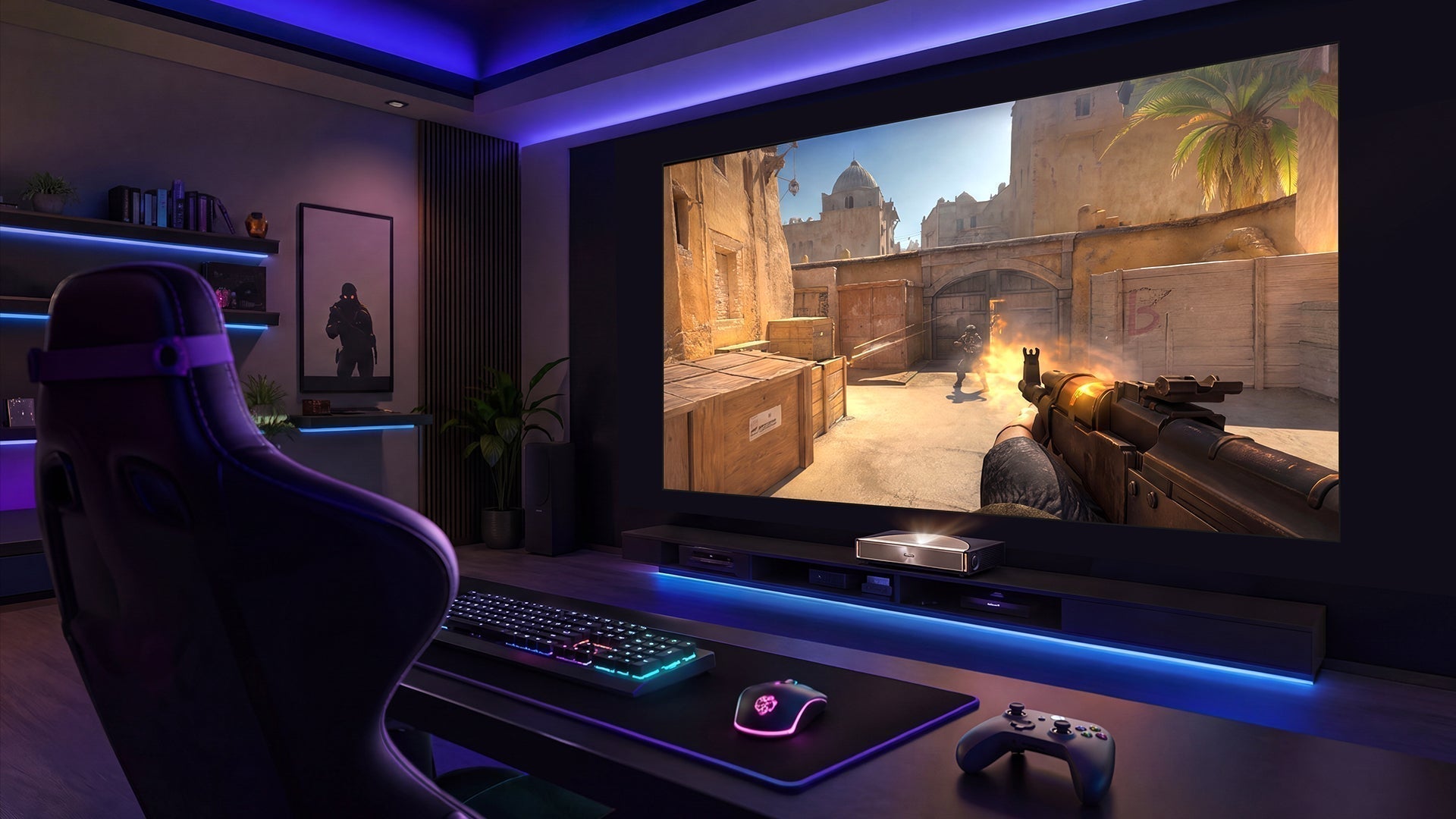
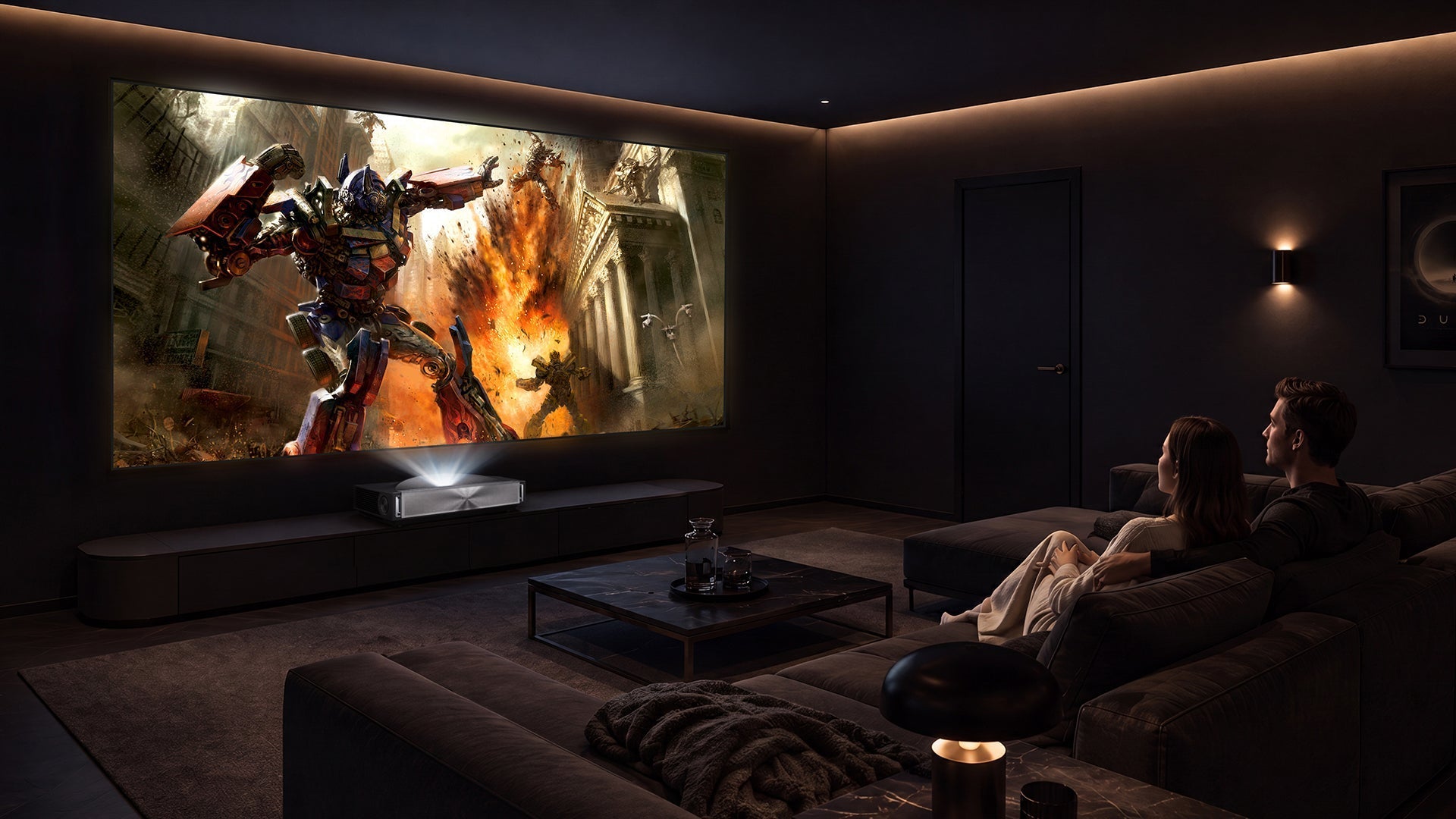
Matte white screens are purpose-built for one environment above all others: the controlled lighting room — your dedicated home theater, the “bat cave” with blackout curtains, no windows, and dimmable lighting.
Why does matte white excel here? Because in complete darkness, you don’t need a screen that fights ambient light. You need a screen that gets out of the way — that presents the projector’s image with maximum brightness, neutral color reproduction, and zero interference.
Key performance characteristics of a premium matte white screen:
| Parameter | Typical Specification | Why It Matters |
|---|---|---|
| Gain | 1.0 – 1.3 | Reflects projector light efficiently without artificially boosting or dimming. |
| Viewing Angle | 160° – 180° | Uniform brightness from any seat — no “sweet spot” tyranny. |
| Color Accuracy | ISF Certified (many models) | Neutral spectral response; colors appear exactly as the director intended. |
| Surface Construction | Tensioned matte PVC or fiberglass | Wrinkle-free, perfectly flat display with zero texture artifacts. |
| Black Backing | Yes (on quality screens) | Eliminates light penetration through the material to preserve perceived contrast. |
Matte White vs. White Wall: The Numbers Don‘t Lie
Here’s where things get interesting. Many beginners ask: “Why buy a screen when I have a perfectly good white wall?” The answer lies within the physics of reflection.
A standard matte white wall paint has a gain between 0.7 and 0.9 — meaning it reflects 10–30% less light back to your eyes than a dedicated matte white screen. A proper matte white screen reaches 1.0 to 1.3 gain. That‘s a substantial brightness difference you can easily see and measure.

But gain is only part of the story:
- Surface texture: Even a freshly painted wall has micro-irregularities, roller marks, and subtle textures that scatter light unevenly, softening fine details and degrading 4K clarity.
- Color neutrality: Standard wall paints contain unpredictable pigments. Off-white warms the image falsely, while cool white makes skin tones look harsh. Specialized screens are engineered for true neutral spectral reflection.
- Black borders: A proper frame screen features a high-absorption black velvet frame that absorbs light overspill and dramatically enhances perceived image contrast. A bare wall has none.
“A screen can reflect light more efficiently than a painted wall... Screens are designed to be more color consistent, so whites look cleaner and colors look more believable. If you paid for a projector with solid color performance, a wall can quietly erase part of that advantage.”
Even XGIMI, in their technical analysis, notes that a smooth white matte wall retains only 85–90% of the overall contrast performance of a basic white projector screen.
What the Experts Say
AVSForum — the world‘s largest home theater community — has long held the clear consensus: “If your room is a perfect ’bat cave‘ with no ambient light and 0 reflections from the ceiling and walls, you should use a matte white screen.”
Projector Reviews notes that matte white screens have been the workhorse of home theater for years. One reviewer shared: “I’ve used a Da-Lite matte white electric screen in my home theater and as one of my technical evaluation screens for years.” They also emphasize that while matte white “doesn‘t enhance the picture performance of a specific type of projector, it does not hurt the picture performance either” — which, in the world of reference-grade imaging, is exactly what purists want.
Stewart Filmscreen — widely regarded as the pinnacle of projection screen manufacturing — offers the StudioTek 100, described as “our most requested residential fabric, a flexible, front projection, matte white screen material formulated to meet the strictest color and white field uniformity standards.” This “unity gain, reference material is an optimal diffuser and disperses light in a near perfect, hemispherical distribution so that image brightness is virtually unchanged when viewed from any angle.” For the most demanding color professionals, Stewart‘s SnoMatte 100 is “the de facto standard for digital intermediate and color editing during the filmmaking process.”
Elite Screens — one of the industry‘s most widely recognized and trusted brands — describes their CineWhite® matte white material as delivering “top-tier performance in producing accurate color rendition that exceeds the highest requirements of color purists as well as the industry’s leading integrators.” Their CineWhite material offers 1.1 gain with a 180° wide viewing angle, is Active 3D, 4K Ultra HD, and HDR Ready, and features black backing to eliminate light penetration. It‘s the material that has become a benchmark in the home theater community — trusted by thousands of enthusiasts who demand reference-grade image quality without compromise.
Screen Innovations — a leader in high-end residential and commercial screens — offers Pure White 1.3 gain material that “provides the perfect complement to modern, laser-based projectors.” CE Pro notes that “modern matte white screens aren’t your grandfather‘s Oldsmobile,” and SI‘s Pure White material “employs a micro texture that is nine times as fine and smoother than a standard matte white screen,” supporting resolutions as high as 8K.
For 4K and even 8K projection, matte white screens are fully ready. Da-Lite’s HD Progressive 1.1 surface, for example, is “engineered for high resolution projection where color fidelity, image uniformity and pixel preservation are vital” and is “the best surface for HD, 4K and Ultra HD projection,” designed for resolutions up to 16K.


Matte White vs. The Competition — A Neutral Comparison
Matte white isn‘t the only game in town. Let’s look at how it stacks up against the other major screen types — objectively and without bias.
Matte White vs. Gray Screens
Gray (or “high contrast”) screens feature a darker tint designed to artificially improve black levels by absorbing stray ambient light. However, this configuration introduces clear tradeoffs.
| Aspect | Matte White Screen | Gray Screen |
|---|---|---|
| Best Environment | Full darkness, controlled light environments | Low to moderate ambient light spaces |
| Gain Rating | 1.0 – 1.3 | 0.8 – 1.0 |
| Viewing Angle | Extremely Wide (160°–180°) | Moderate (~90°) |
| Brightness Efficiency | Maximum output utilization | Reduced — requires a 15–18% brighter projector |
| Color Integrity | Neutral, reference-grade purity | Can appear slightly dull or muted |
| ALR Throw Type | For Long/Short/UST Projectors | For UST Projectors |

The verdict: Gray screens are a structural compromise. They assist if you have ambient light you cannot control, but they come at the cost of overall brightness and color vibrancy. In a properly dark room, a matte white screen (for long/short/UST projectors) delivers a significantly more accurate, open, and natural image.
Matte White vs. ALR (Ambient Light Rejecting) Screens
ALR screens use microscopic optical structures to reject light coming from above and the sides while preserving the projector’s light.
| Aspect | Matte White Screen | ALR Screen |
|---|---|---|
| Best Environment | Full darkness, controlled lighting | Bright rooms, living rooms, daytime viewing |
| Gain Rating | 1.0 – 1.3 | Varies (0.6 – 1.8+) |
| Viewing Angle | Wide (up to 180°) | Narrow (~30°–90°) |
| Ambient Light Rejection | None — reflects all light | High — rejects 85–95% of ambient light |
| Price Range | Affordable & cost-effective | 2–3× more expensive |
| Image Character | Open, even, accurate | Punchy, high-contrast, directional |
Here‘s the key insight from industry analysis: “If your room can get properly dark, a white screen is often the better value and sometimes the better picture.” ALR screens are not magic — they solve a specific problem (ambient light) and introduce trade-offs (narrower viewing angles, higher cost, potential color shifts).
“ALR is not magic, and white is not outdated. Each one solves a different problem.”
The Existence Necessity of Matte White
So why does matte white still exist — and thrive — in a world of ALR and gray screens?
Because for the dedicated home theater enthusiast who has invested in room treatments, blackout curtains, and a quality projector, matte white is not a compromise — it‘s the reference standard. It delivers:
- Maximum brightness from your projector’s light output
- Neutral, accurate color without artificial enhancement or suppression
- Wide, forgiving viewing angles for family and group viewing
- Universal compatibility with long throw, short throw, and ultra-short throw projectors
- Cost-effectiveness — you‘re not paying for technology you don’t need
Who should buy a matte white screen?
- Owners of dedicated home theaters with full light control
- Cinephiles who prioritize color accuracy and reference-grade image quality
- Users with bright projectors (2,500+ lumens) who don‘t need help with brightness
- Anyone on a budget who wants maximum performance per dollar in a dark room
Who should look elsewhere?
- Living room users with unavoidable daylight
- Those who can’t control ambient light
- Daytime viewers who refuse to draw curtains
NothingProjector‘s Matte White Motorized Floor-Rising Screen — Reference Performance, Real-World Value
Now let’s talk about a product that embodies everything we‘ve discussed — and delivers it at a price that will make you do a double-take.
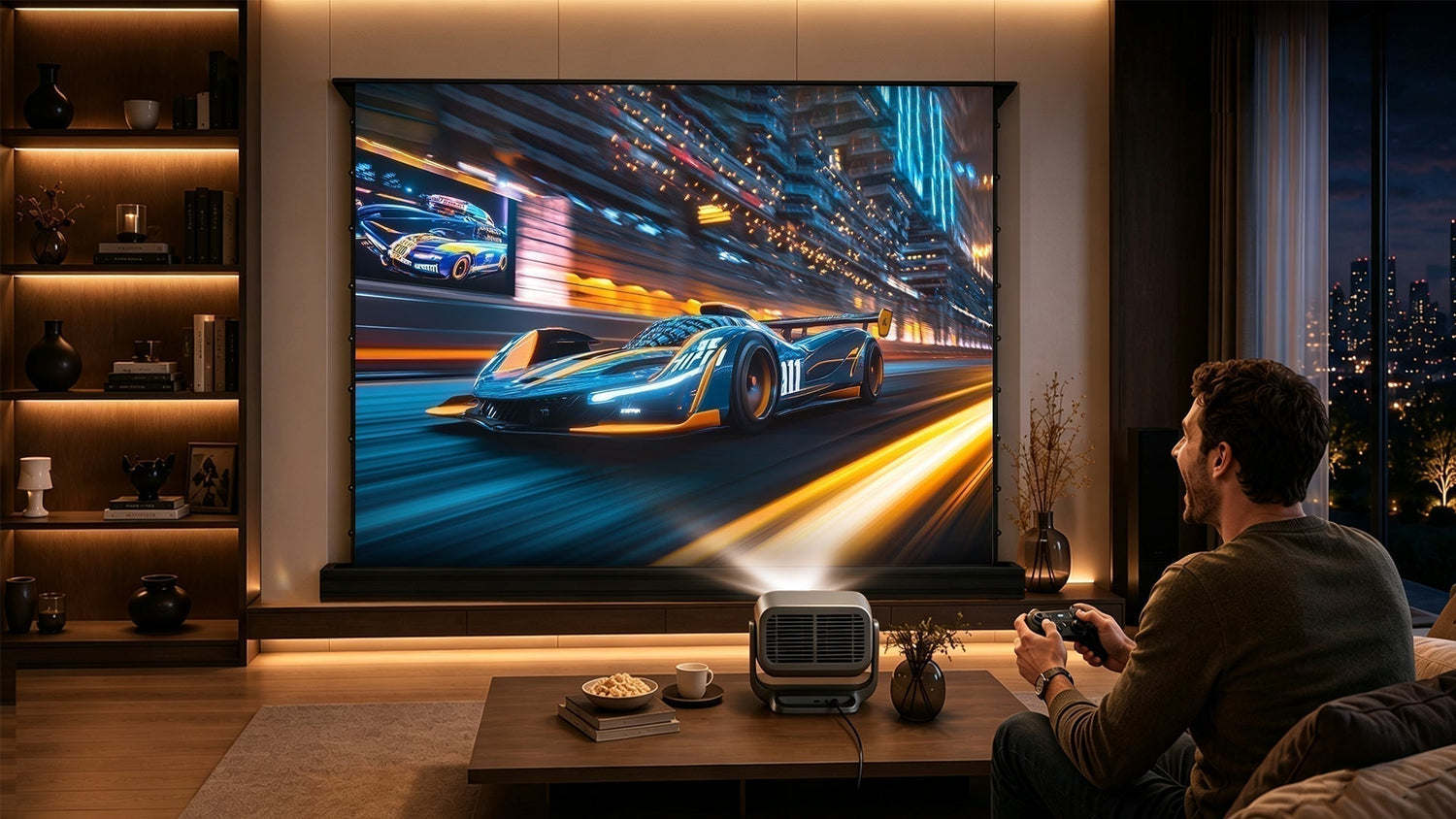
The NothingProjector Matte White Motorized Floor-Rising Screen (available in 100″–120″ sizes) is a purpose-built matte white screen designed for long throw, short throw, and ultra-short throw projectors.
Specifications That Meet — and Exceed — the Standard
| Specification | NothingProjector Matte White | Industry Standard (Premium) |
|---|---|---|
| Material Base | Premium matte white PVC cloth layer | Tensioned matte white PVC |
| Gain Value | 1.3 | 1.0 – 1.3 |
| Viewing Angle | 170° | 160° – 180° |
| Form Factor | Motorized Floor-Rising (Disappearing base) | Often restricted to fixed frames only |
| Resolution Support | 4K / 8K / Active 3D Ready | Yes |
| Black Backing | Yes (100% light opaque) | Yes |


The NothingProjector screen checks every box that defines a premium matte white screen:
- 1.3 Gain — This puts it squarely in the sweet spot identified by industry experts. Gains around 1.1 to 1.3 offer natural color reproduction and wide viewing angles. It‘s brighter than a standard wall (0.7–0.9 gain) and matches reference-grade performance standards.
- 170° Wide Viewing Angle — This is the gold standard. A wide viewing angle uniformly reflects a bright image across the entire surface for superior off-axis viewing, ensuring every seat in the room gets the same great image.
- Universal Projector Compatibility — Works with UST, short throw, and standard long throw projectors. If you have a matte white screen, it is fully compatible with any projection throw distance.
- Motorized Floor-Rising Design — This is where NothingProjector goes beyond the fixed-frame standard. Most premium matte white screens are fixed-frame installations. NothingProjector gives you reference-grade matte white performance in a motorized, space-saving floor-rising format that disappears when not in use.
The Value Proposition — NothingProjector vs. the Competition
Let‘s talk price.
NothingProjector’s matte white motorized floor-rising screen is priced to compete with — and beat — screens that offer less functionality.
The direct competitor in this space is the AWOL Vision matte white fixed frame screen, which:
- Is a fixed frame — not motorized, not floor-rising
- Offers 1.3 gain and 170° viewing angle
- Costs significantly more for a comparable size
Here‘s the reality: AWOL’s matte white screens are priced at a premium that reflects the brand name as much as the material. NothingProjector delivers the same — or better — performance specifications (1.3 gain, 170° viewing angle, 4K/8K ready, active 3D compatible) plus the convenience of motorized floor-rising operation, at a price that undercuts the competition.
One AVSForum user who purchased a NothingProjector screen put it bluntly: “It‘s a terrific value compared to competing screens from established players, was easy to put together, and it pairs well with my choice for the best bang for the buck projector in 2025.”
Another reviewer noted: “I was genuinely impressed by how well it suppresses ambient light — it’s on par with some of the premium options like AWOL Vision, yet it comes at a more affordable price point.”
Built for the Dedicated Home Cinema — and Beyond
Remember what we established earlier: matte white is the reference standard for controlled lighting environments. NothingProjector‘s screen is engineered precisely for this use case — the dedicated home theater where you want maximum brightness, accurate color, and a wide viewing angle.
But the motorized floor-rising design adds a layer of versatility that fixed-frame screens can’t match. It‘s perfect for:
- Dedicated home theaters where you want a permanent screen that retracts when not in use
- Multi-purpose rooms that need to transition from living space to cinema
- Rental apartments where wall-mounting isn’t an option
- Users who want cinema quality without permanent installation
Care, Maintenance, and Pristine Longevity
A quality matte white screen is an investment in your viewing experience. Here‘s how to protect it:
Cleaning: Matte white PVC surfaces are typically washable and moisture-resistant. For routine maintenance:
- Use a soft, dry microfiber cloth to gently remove dust.
- For stubborn marks, use a mild soap solution with a soft cloth — never abrasive chemical cleaners.
- Always wipe gently; never scrub with force.
Storage (for motorized screens):
- Keep the screen retracted within its protective case when not in use to protect from dust, airborne contaminants, and accidental damage.
- Ensure the floor area where the screen rises is completely clear of physical obstructions.
- Avoid touching the screen surface with bare hands — natural body oils can leave marks.
Environment:
- Maintain consistent room humidity to prevent material warping.
- Keep the screen away from direct heat sources.
- In dedicated theaters, consider room treatments (dark walls, ceiling) to maximize the matte white‘s performance.
Why NothingProjector?
NothingProjector has established itself as a brand that understands one thing above all: performance per dollar matters.
The company’s screens have earned recognition from the most discerning reviewers. The NothingProjector 120-inch Black Series ALR screen earned an AVSForum Top Choice for 2025. Users consistently praise the build quality:
“The build quality is excellent — feels more solid than Vividstorm. The screen used to wobble when going up and the NP does not. Basically this is better than my VS in every way.”
And when it comes to the matte white offering specifically, NothingProjector delivers:
- Reference-grade matte white material with 1.3 gain and wide 170° viewing angle
- Motorized floor-rising convenience at a fraction of the cost of comparable fixed-frame screens from premium brands
- Universal projector compatibility — UST, short throw, and standard long throw
- 4K and 8K ready — future-proofed for the highest resolution content
- 100% light opaque black backing to eliminate light penetration and maximize contrast
Conclusion: The Right Tool for the Right Room
Matte white projection screens are not outdated. They are not a compromise. They are the reference standard for the one environment where image quality matters most: the dedicated, light-controlled home theater.
If you have a dark room, a quality projector, and a passion for accurate, bright, wide-angle cinema — matte white is not just an option. It‘s the right choice.
And if you want that reference-grade performance in a motorized floor-rising format that saves space, looks elegant, and costs significantly less than the competition — NothingProjector’s matte white screen is the answer.
Elevate your view. Not your budget.