



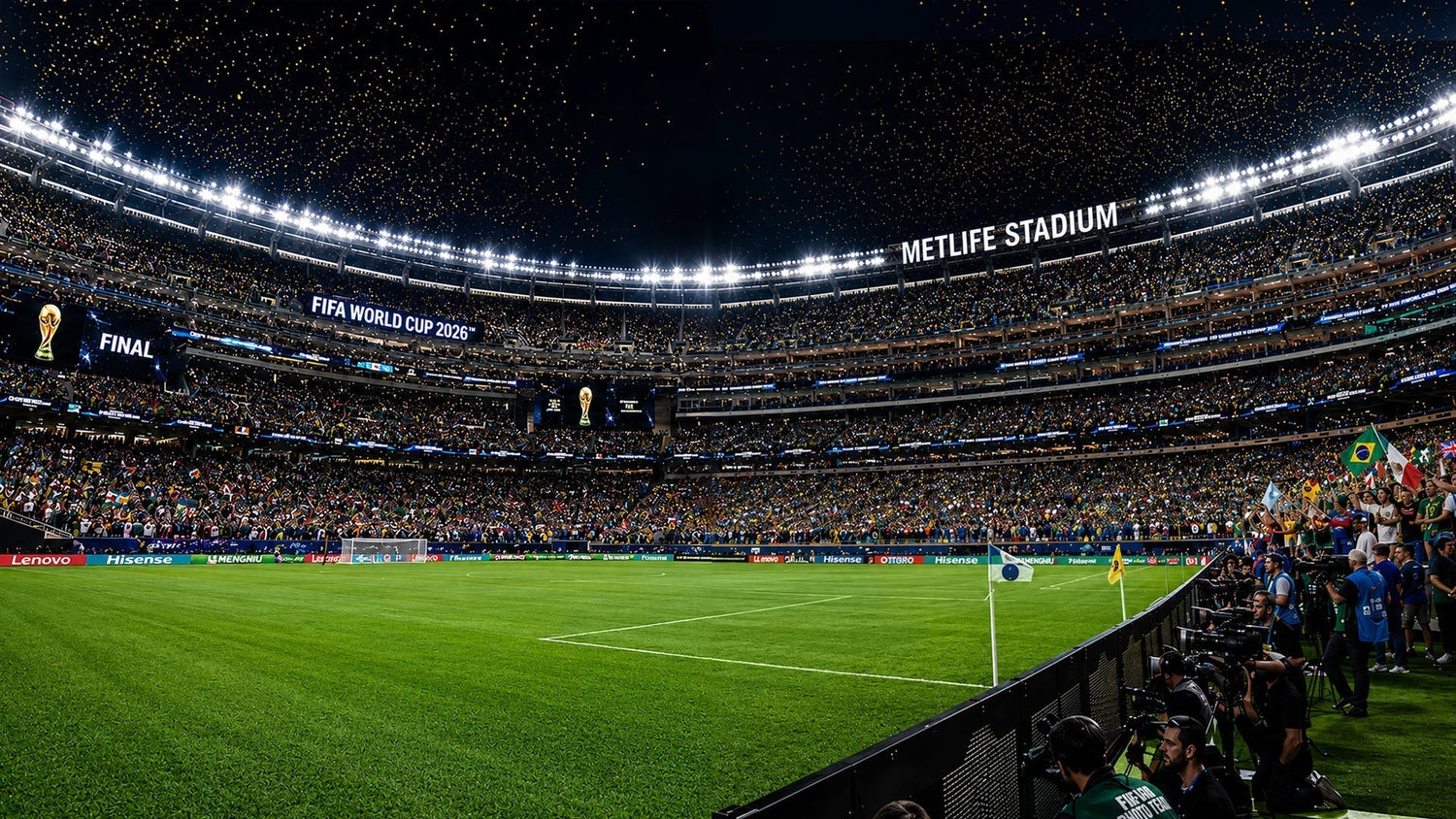
The 2026 FIFA World Cup has come to a close, and it was unlike any tournament before it. For the first time in history, 48 nations took the pitch across 104 matches, spread across 16 host cities in the United States, Mexico, and Canada. The tournament ran from June 11 to July 19, spanning 39 days of football that captivated the globe. A record-setting 6,810,966 fans filled the stands, witnessing 308 goals across 16 state-of-the-art stadiums.
When the final whistle blew at MetLife Stadium in New York New Jersey, Spain emerged as champions, defeating defending titleholders Argentina 1-0 in extra time. Ferran Torres broke the deadlock in the 106th minute, securing Spain's second World Cup trophy and their first in 16 years. Spain didn't just win the trophy — they swept the individual honors as well. Rodri took home the adidas Golden Ball as the tournament's best player, Unai Simón claimed the Golden Glove with seven clean sheets in eight matches, and Pau Cubarsí was named the Best Young Player. France's Kylian Mbappé finished as the tournament's top scorer with 10 goals, claiming the Golden Boot.
The prize money was historic, too. FIFA allocated a record $655 million prize fund for the 48 participating teams — a 50% increase from the 2022 tournament in Qatar. Champions Spain took home $50 million, while runners-up Argentina received $33 million. Third-place England earned $29 million, and fourth-place France received $27 million. Every team that qualified walked away with at least $10.5 million, including a $1.5 million preparation grant.
But if you were watching the tournament closely, you might have noticed something curious. The world's most-watched sporting event unfolded across North America this summer — and yet, one of the world's most populous nations was nowhere to be found on the pitch.
So Where Was China?
It's a question that often invites a knowing smile. A long-circulating joke among Chinese football fans goes something like: "We were taught from childhood to love and protect the grass — so we never learned to tear it up on the pitch." It's a playful jab at a national footballing identity that has struggled to find its footing on the global stage.
The serious answer is far less amusing. China does have a men's national football team — but the 2026 campaign was another disappointing chapter. Ranked 91st in the FIFA world rankings, the team managed just one win in their final qualifying group matches and suffered four consecutive defeats down the stretch. The dream of a second World Cup appearance since 2002 — China's only qualification to date — slipped away once again.
But here's the twist: while Team China missed the World Cup, China absolutely did not.
The Highest "China Content" in World Cup History
If you look beyond the pitch — past the players, past the goals, and past the trophy lift — you'll find China's fingerprints on nearly every corner of this tournament. From the technology that decided offside calls to the buses that carried fans to the stadiums, the 2026 World Cup featured more Chinese participation than any edition before it. Not just in volume, but in depth.

Official Sponsors: From Billboards to the Backbone
Of the 16 global official sponsors for the 2026 World Cup, three Chinese companies secured spots: Lenovo, Hisense, and Mengniu. Industry estimates put their combined sponsorship investment at over $500 million. But what made this year different wasn't the money — it was the role they played.
Previous World Cups saw Chinese sponsors primarily buying billboard space. This time, they embedded themselves into the tournament's core operations. Lenovo stepped in as a FIFA global partner and official technology partner, replacing Wanda in the top-tier sponsorship tier. Hisense returned as the official VAR display technology partner. And Mengniu continued its three-tournament run as the official dairy and ice cream partner.
The Tech That Made the Tournament Possible
This was the first AI-powered World Cup — and Chinese technology was the engine behind it.
- VAR and Display Technology — Hisense supplied RGB-Mini LED professional display equipment to VAR operation centers worldwide. These screens offered millisecond-level response times and zero-lag latency, meeting the exacting color accuracy standards required for critical referee reviews. Chinese referee Fu Ming, who served as a VAR official at this tournament, worked directly with this equipment.
- 3D Digital Human Offside Technology — Lenovo spent 18 months traveling to all 48 teams' training camps to complete full 360-degree, millimeter-precision 3D digital modeling of all 1,263 participating players. This AI-powered offside detection system appeared in nearly every match of the tournament, providing referees and audiences with the most intuitive and accurate offside visualization possible.
- FIFA AI Pro Super Intelligence — Lenovo's proprietary AI system integrated historical match data, real-time game footage, and player information into a callable intelligent insights platform. Post-match tactical analysis that previously required two days could now be completed in just two hours, with accuracy and professionalism exceeding 95%. All 48 teams used this tool, democratizing high-level tactical analysis for smaller footballing nations.
- Referee's Perspective AI Video Enhancement — Lenovo's AI-powered video enhancement system reduced camera shake by approximately 60% and provided fans with a first-person, immersive referee's perspective. According to FIFA, this referee's perspective feature appeared an average of three times per match.
- The Official Match Ball — The tournament's official match ball, named Trionda, was fully manufactured in China. It featured a smart sensor with a 500Hz chip that captured data on the ball's trajectory, speed, spin, and directional shifts 500 times per second. This very technology settled a disputed goal in the Sweden-Tunisia match, when the ball's ultra-precise touch timestamp data reversed an offside call to confirm the goal's validity.

The Supply Chain That Kept the Tournament Running
Beyond the technology, China's manufacturing and infrastructure backbone was everywhere.
| Sector | Key Contribution & Performance Metrics |
|---|---|
| Merchandise and Fan Gear | In the first two months of 2026 alone, Yiwu's exports of sporting goods to the US, Canada, and Mexico reached 550 million yuan (approx. €71 million), up 21.3% YoY. By May, exports hit 4.91 billion yuan (approx. €635 million). Yiwu-made goods accounted for 70% of global market share for World Cup peripherals across 9,000+ categories. Local merchants leveraged AI design tools to rapidly generate custom patterns. |
| Transportation & Mobility | In Mexico City, over 95% of 800 new-energy shuttle buses deployed for fans were Chinese brands. CRRC supplied 115 light rail trains operating across Mexico City, Monterrey, and Guadalajara, transporting 1.25 million passengers daily and connecting fans to Azteca Stadium and other match sites. |
| Cross-Border Logistics | CCPIT processed 3,922 batches of World Cup-related supplies through its ATA Carnet system, covering photography equipment, broadcast gear, and fan festival materials for streamlined customs clearance. |
| Stadium Infrastructure | Of the 16 host venues, nine directly or indirectly used Chinese building materials and equipment. Chinese engineering firms also participated in the comprehensive renovation of Estadio Azteca. |
From Supply Chain Scale to Core Technology Depth
When you stack it all up, the numbers are staggering. Nine out of 16 venues with Chinese materials. 115 CRRC trains carrying 1.25 million passengers daily. A 70% global market share for Yiwu's peripheral merchandise. €71 million in early-year exports to the three host nations. 3,922 logistics batches cleared through ATA Carnet. Three Chinese global sponsors with over $500 million in investment. And perhaps most significantly — core technologies embedded in VAR, offside detection, AI analytics, and even the official match ball itself.
By any measure — supply chain coverage breadth, core technology integration depth, and industrial ecosystem scale — the 2026 World Cup marked the highest level of "China content" in the tournament's history. Previous tournaments in South Africa, Brazil, and Qatar saw significant Chinese manufacturing participation. But none approached the systemic, end-to-end integration that defined this edition.

How Did You Watch It?
With all that said, let's bring it back to you — the fan.
Did you make the trip to North America to catch the action live? Or did you join the billions of viewers around the world who gathered with family and friends in front of televisions, laptops, or home theater projection screens? Did your team deliver the result you were hoping for? And — be honest — did you catch those Chinese brand logos flashing on the stadium perimeter boards throughout the tournament?
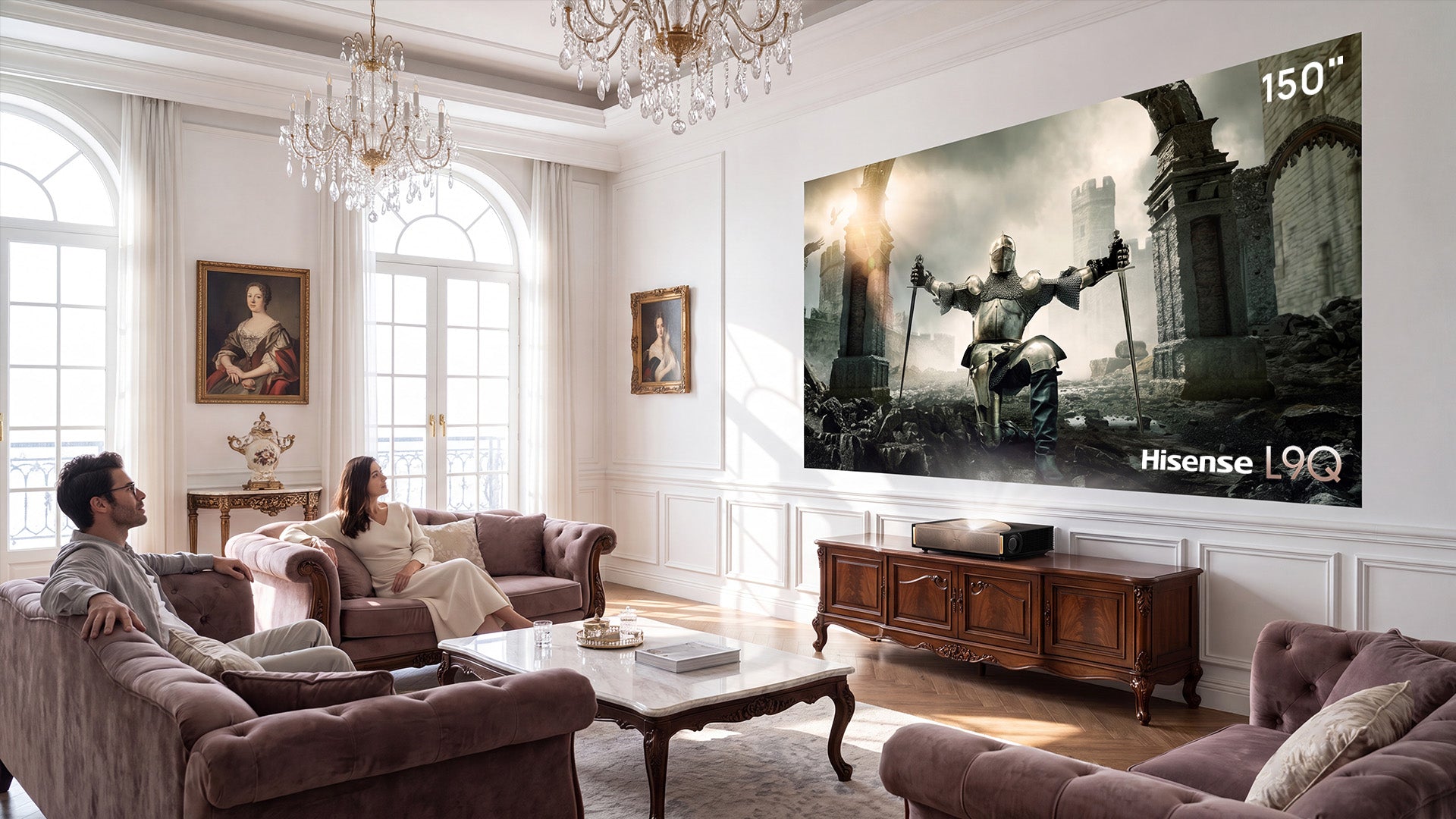
There's something special about watching the World Cup in a dedicated home theater space. The big screen, the immersive sound, the ability to pause for snacks or replay that controversial offside call — it's a viewing experience that rivals being in the stands, minus the flight and the hotel bill. With a quality projector and the right screen, you can bring the stadium atmosphere right into your living room.

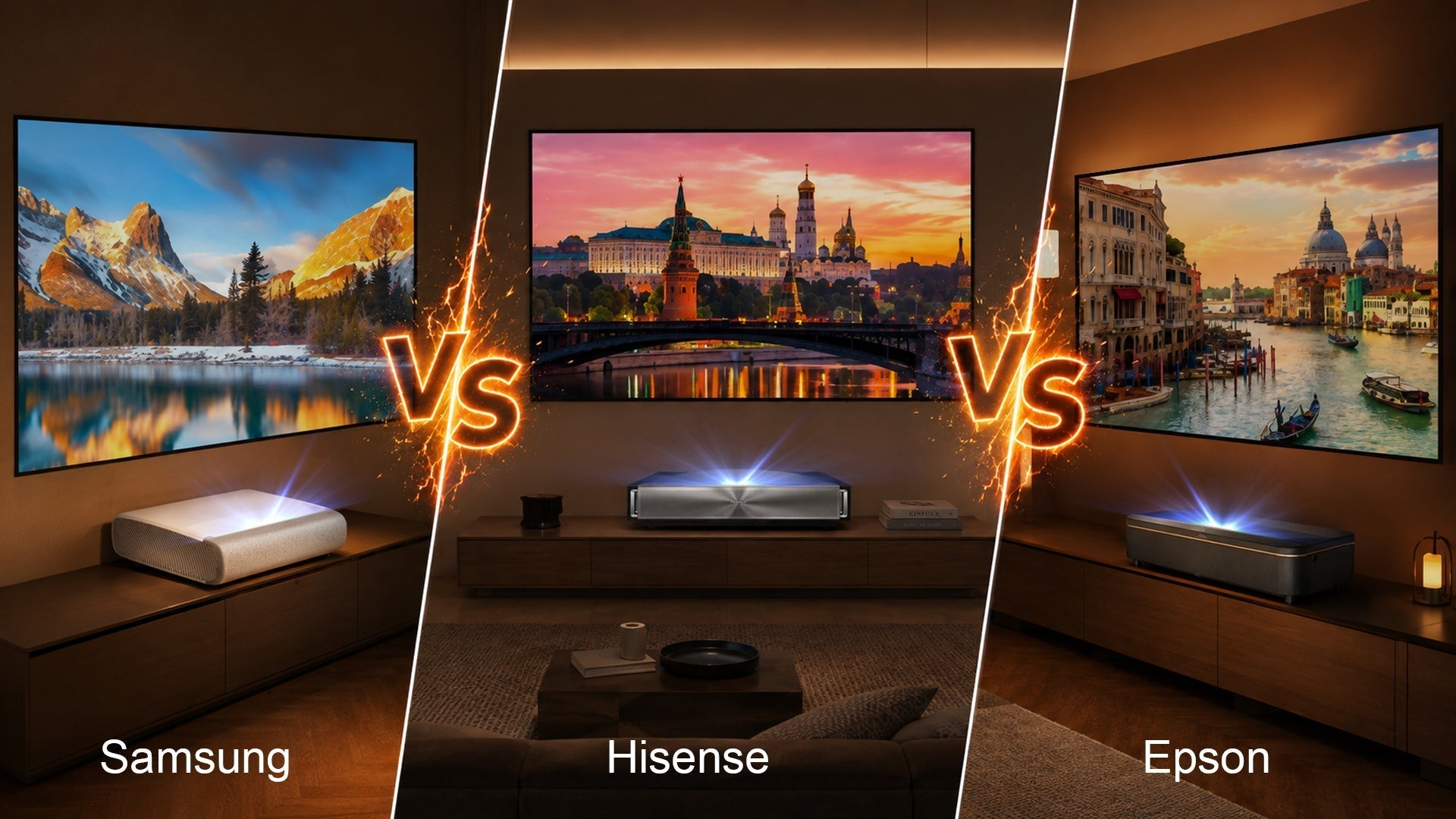
Speaking of which — Amazon Prime Day just wrapped up. Did you manage to snag a deal on a new projector? If you did — or even if you're still shopping — here's a quick tip to get the most out of your investment. To unlock a projector's full visual potential, you need more than just a blank wall. Whether you're using a standard throw projector or an ultra-short throw (UST) model, pairing it with a dedicated projection screen makes a world of difference in image quality, contrast, and overall viewing pleasure.
Meet the NothingProjector Motorized Floor-Rising Screen
For those looking to elevate their home viewing experience, the NothingProjector Motorized Floor-Rising Screen (available in 100" and 120" sizes) is worth a close look.
Here's what makes it stand out:
- Motorized Floor-Rising Design — With the press of a button, the screen rises smoothly from its base and retracts just as easily when you're done. No ceiling mounting required, no permanent installation — it's perfect for renters or anyone who wants a clean, uncluttered living space when the screen isn't in use.
- 95% Ambient Light Rejection (ALR) — This is the screen's killer feature. Standard white screens wash out in anything but complete darkness. The NothingProjector's ALR technology rejects ambient light from the sides and above, preserving contrast and color saturation even in rooms with some daylight or overhead lighting. It is rated 4.9 stars by users who have put it to the test.
- Compatibility — The screen works with ultra-short throw (UST) projectors, supporting 4K and even 8K UHD resolution. It is also compatible with Active 3D content.
- Easy Control — The screen comes with a remote control and can also be operated via the 'Graffiti' app. You can set custom height limits to match your projector's exact throw position.
- Built to Last — The motorized mechanism is designed for smooth, reliable operation over years of use.

Whether you're hosting a World Cup final watch party, binge-watching your favorite series, or setting up a dedicated home cinema, a quality ALR screen like this one transforms what your projector can deliver. The difference between projecting onto a wall and projecting onto a purpose-built screen is night and day — literally.
So, as the 2026 World Cup fades into memory and we look ahead to the next tournament, one thing is clear: whether on the pitch or off it, the world's biggest sporting events are becoming more global, more connected, and more technologically advanced than ever. And China — even without a team on the field — is playing a central role in making that happen.
Now, if you'll excuse me, I have some match highlights to rewatch. On a 120-inch screen, of course.