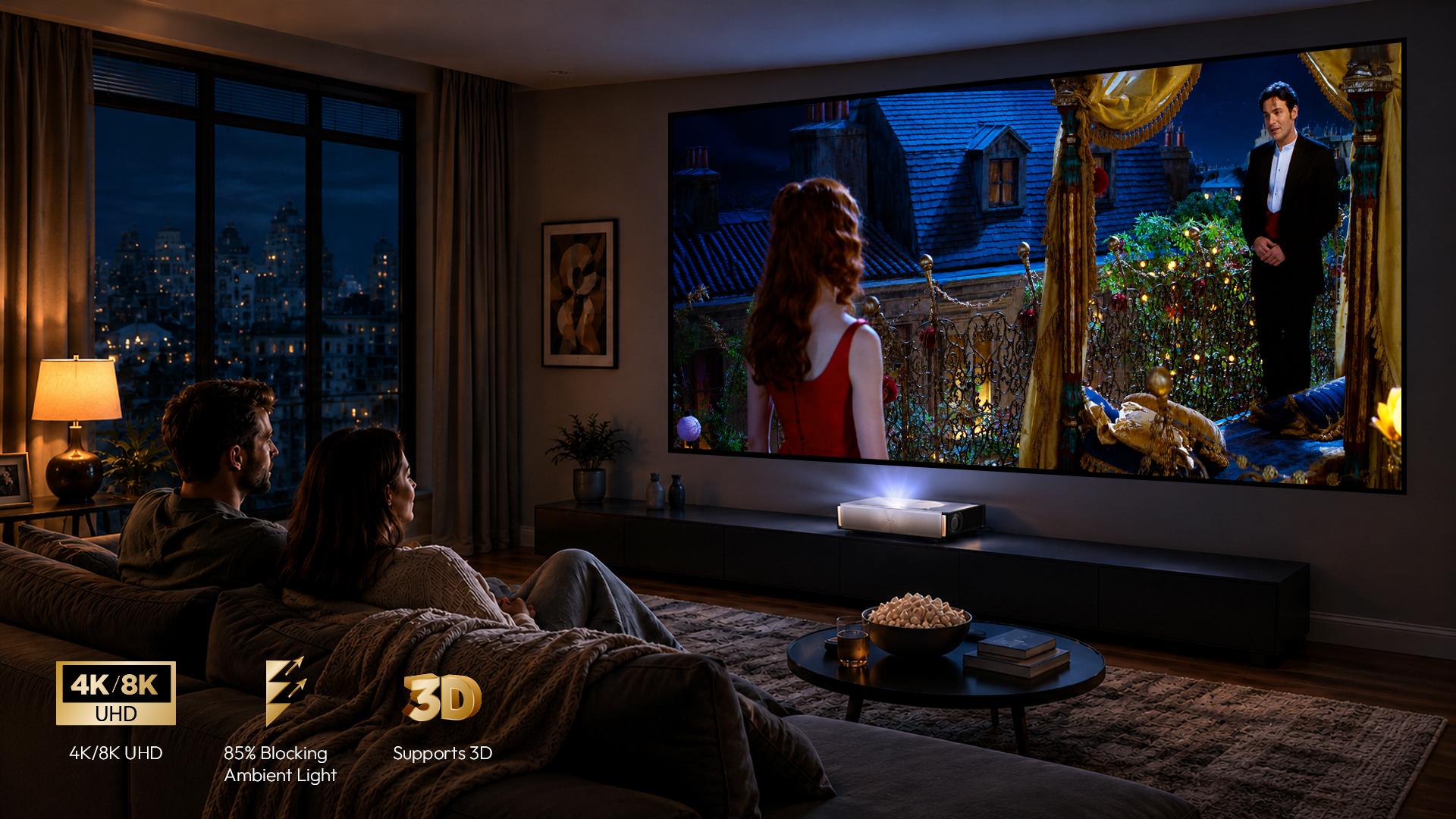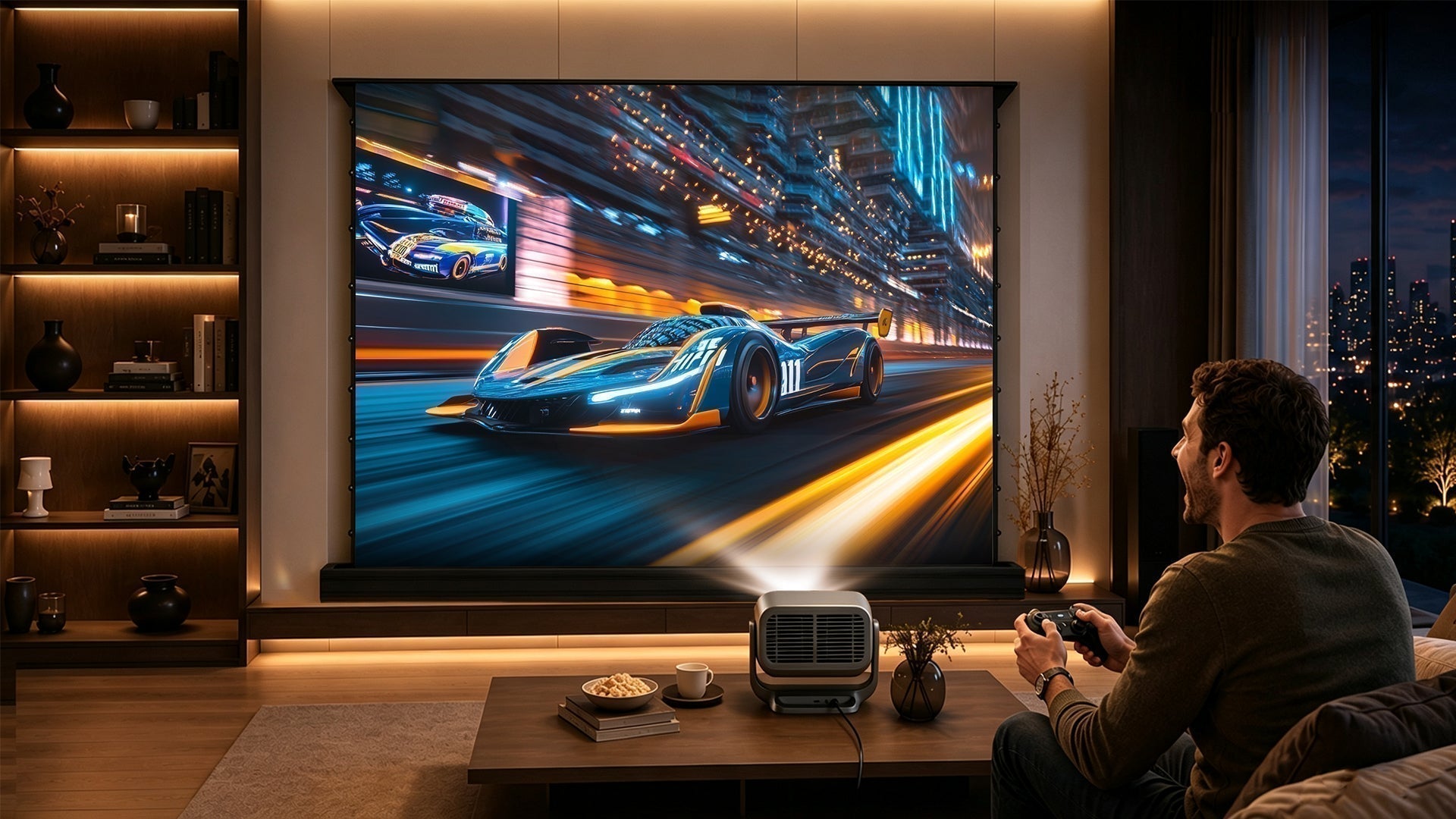




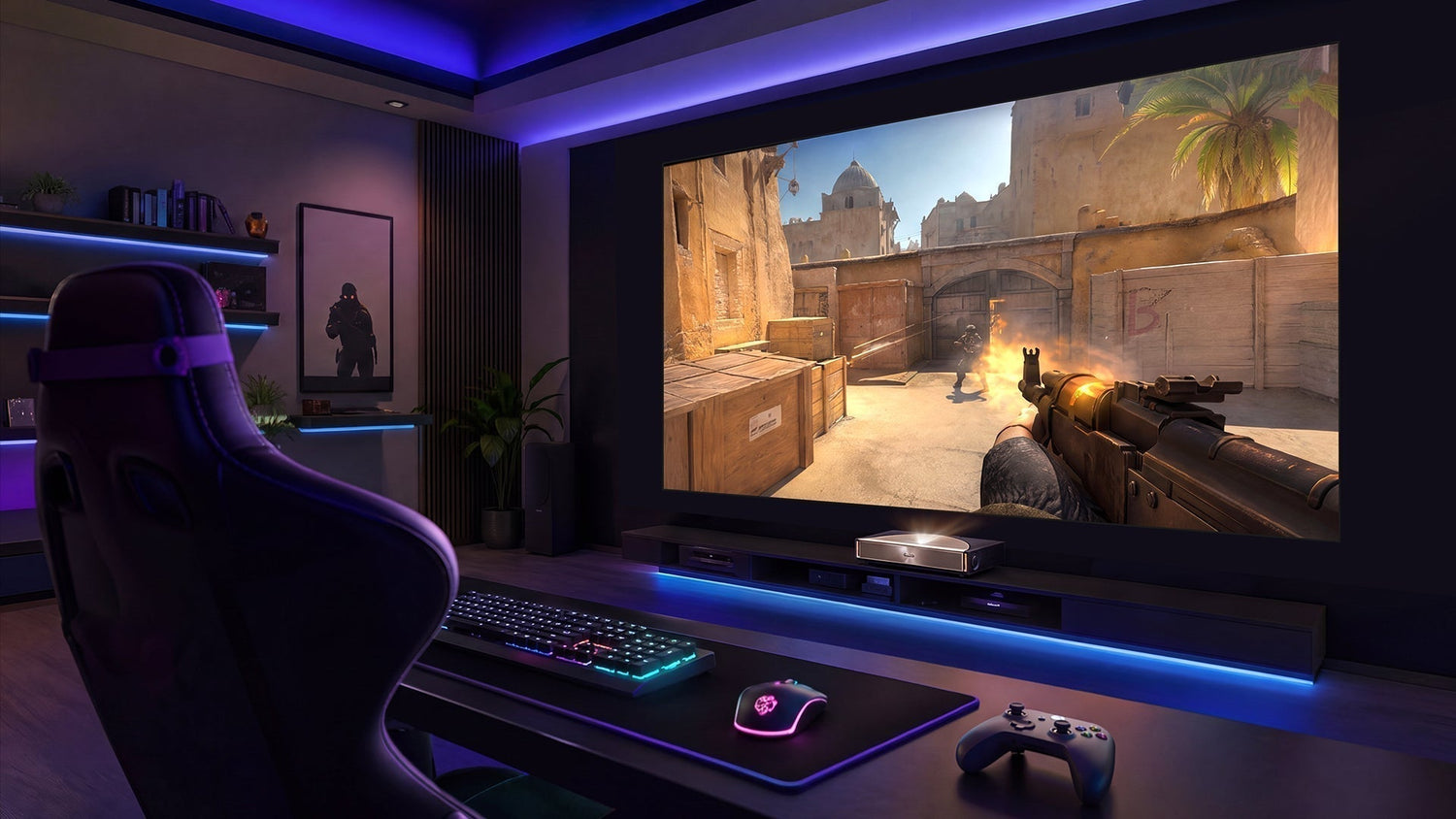
Os jogos evoluíram muito além da simples busca de pixels. Os títulos de hoje exigem telas que possam acompanhar o ritmo dos reflexos ultrarrápidos, oferecer visuais cinematográficos e atrair os jogadores para mundos que parecem quase tangíveis. Mas quando se trata de escolher o certo tela, os jogadores enfrentam uma questão crucial: Um projetor é uma alternativa genuína a um monitor de PC tradicional ou a um monitor de jogos? TV? Vamos nos aprofundar nos dados, na tecnologia e na experiência do mundo real para descobrir.
Os jogos que definem os jogos modernos
Antes de compararmos as telas, vamos ver o que os jogadores estão realmente jogando. Os números contam uma história convincente sobre envolvimento, investimento de tempo e os tipos de experiências que dominam o cenário atual dos jogos.
- Contra-ataque 2: Continua sendo um titã dos jogos competitivos. Após seu lançamento em 2023 como sucessor do CS: GO, o jogo atrai consistentemente mais de 1,5 milhão de jogadores simultâneos somente no Steam. Os jogadores registram rotineiramente centenas a milhares de horas, com muitos jogadores competitivos gastando em média de 3 a 5 horas diárias em partidas classificadas.
- Quinze dias: Continua seu domínio com mais de 247 milhões de usuários ativos mensais em janeiro de 2024. O jogador médio gasta cerca de 6 a 10 horas por semana no Battle Royale da Epic, com grandes eventos no jogo atraindo dezenas de milhões de participantes simultâneos.
- Minecraft: Permanece atemporal, atraindo 178 milhões de usuários mensais em 2023. Os jogadores passam em média 8 a 12 horas semanais, com muitos passando fins de semana inteiros construindo, explorando e sobrevivendo.
- Chamada do dever e outros: A franquia Call of Duty comanda em média mais de 67.000 jogadores ativos em seus títulos, com novos lançamentos gerando picos massivos de engajamento. Grand Theft Auto V e Roblox completam os cinco jogos mais jogados no PS5 e no Xbox em 2024 e 2025 – uma lista que permaneceu teimosamente inalterada por anos.
O próprio Steam estabeleceu um novo recorde de usuários simultâneos em outubro de 2025, com 41,6 milhões de jogadores online simultaneamente – impressionantes 10 milhões de usuários a mais do que os recordes de 2022 e 2023. O que esses números nos dizem? Os jogadores de hoje são profundamente engajados, multiplataforma e ávidos por experiências envolventes. A questão é: qual tela oferece melhor essa imersão?
O cenário da plataforma: onde os jogadores jogam
De acordo com o Relatório do Mercado Global de Jogos de 2025 da Newzoo, o ecossistema de jogos se divide da seguinte forma:
- Dispositivos móveis: 3,0 bilhões de jogadores (83% de todos os jogadores)
- PC: 936 milhões de jogadores (26%)
- Console: 645 milhões de jogadores (18%)
Em termos de receitas, o mercado global de jogos atingirá US$ 188,8 bilhões em 2025, com PC contabilizando US$ 39,9 bilhões (21%) e geração de console US$ 45,9 bilhões (23%). Juntos, PC e console representam 45% do mercado total em US$ 85,8 bilhões. Isso significa que centenas de milhões de jogadores estão escolhendo ativamente seu monitor principal – e essa escolha é mais importante do que nunca.

A experiência de jogo com projetor: um mergulho profundo
Os projetores de jogos modernos passaram por uma transformação dramática. Veja como eles funcionam nas métricas mais importantes.
Clareza Dinâmica e Tratamento de Movimento
Os projetores de jogos de última geração agora oferecem Taxas de atualização nativas de 240 Hz na resolução de 1080p. Isso significa que o movimento parece suave durante sequências rápidas – fundamental para títulos FPS onde o rastreamento de alvos em movimento exige clareza visual. O JMGO N3 final suporta até 4K a 60 Hz e 1080p a 240 Hz com suporte VRR, recebendo elogios por seu “atraso de entrada extremamente baixo” e capacidade de resposta. X2-4K Pro da ViewSonic atinge um ultra-baixo Atraso de entrada de 4,2 ms a 240 Hz.
Atraso de entrada: a métrica crítica
O atraso de entrada – o atraso entre pressionar um botão e ver a ação na tela – pode fazer ou quebrar jogos competitivos. O limite é importante: abaixo de 40 ms é aceitável para a maioria dos jogos; abaixo de 20ms é ideal para jogos competitivos; e abaixo de 10ms representa capacidade de resposta de nível profissional.
Os projetores de jogos modernos diminuíram drasticamente a lacuna:
| Modelo de projetor | Atraso de entrada | Taxa de atualização nativa |
|---|---|---|
| XGIMI Horizonte 20 Máx. | 1ms (1080p) / 3ms (4K) | 240Hz |
| AWOL Vision Aetherion | Classe de 1ms | 240 Hz |
| JMGO N3 final | 1ms | 240Hz |
| VistaSonic X2-4K Pro | 4,2ms | 240Hz |
Esses números rivalizam – e em alguns casos superam – muitos monitores de jogos dedicados.
Brilho e qualidade de imagem
Historicamente, os projetores tinham dificuldades com a luz ambiente. Isso não é mais verdade. O XGIMI Horizonte 20 Máx. entrega 5.700 lúmens ISO de brilho máximo - o suficiente para projetar um Imagem de 300 polegadas que permanece visível mesmo com as luzes acesas. O JMGO N3 final é descrito como “incrivelmente brilhante” com “ótimo contraste para desempenho sólido em salas escuras” e suporta Dolby Vision e HDR10+.

O confronto direto: projetor vs. monitor vs. TV
Tempo de resposta e troca de pixels
Monitores de jogos (especialmente painéis TN e OLED) lideram com tempos de resposta inferiores a 1 ms. O Asus ROG Swift PG32UCDM (4K, 240 Hz QD-OLED) representa o auge do desempenho do monitor. TVs para jogos, particularmente modelos OLED como OLED evo M5 da LG, oferece baixo atraso de entrada em 4K 144 Hz. No entanto, eles normalmente não conseguem corresponder à escala da projeção. Enquanto isso, projetores de jogos agora alcança tempos de resposta de 1 a 5 ms – efetivamente indistinguíveis dos monitores para todos, exceto os jogadores competitivos de elite.
📊 Comparação de taxa de atualização
| Categoria de exibição | Atualização típica | Capacidade de ponta |
|---|---|---|
| Monitor de jogos | 144-240Hz | Até 500 Hz |
| Jogos TV | 120-144 Hz | 144Hz (4K) |
| Projetor de jogos | 120-240 Hz | 240Hz (1080p) |
Tamanho da tela e imersão
É aqui que os projetores ganham de forma decisiva. Um Imagem de 100-300 polegadas transforma o jogo de uma atividade na tela em uma experiência de campo completo. Os jogos de corrida parecem que você está ao volante. RPGs se tornam mundos em que você entra. Os jogos de terror tornam-se genuinamente assustadores.
🏆 Principais escolhas por categoria
Monitores de jogos:
- Asus ROG Swift PG32UCDM – 4K, 240 Hz QD-OLED, ~$1.100
- Alienware AW3425DW – QHD, 240 Hz QD-OLED, ~$1.200
TVs para jogos:
- LG OLED evo M5 – 4K, 144 Hz, capacidade sem fio
- Sony BRAVIA XR8B – Atraso de entrada muito baixo, OLED
Projetores de jogos:
- XGIMI Horizon 20 Max – 4K, 240 Hz, atraso de 1 ms, US$ 3.000
- JMGO N3 Ultimate – 4K, 240 Hz, atraso de 1 ms, suporte VRR
- AWOL Vision Aetherion Max – 4K, 240 Hz, classe de 1 ms, US$ 4.999
- ViewSonic X2-4K Pro – 4K, 240 Hz, atraso de 4,2 ms

Por que os projetores ganham na imersão
Depois de analisar os dados, é aqui que os projetores se destacam:
- 1. Escala cria presença: Uma imagem de 120 polegadas preenche sua visão periférica de uma forma que nenhum monitor de 27 polegadas consegue. Isto não é apenas maior – é qualitativamente diferente. Seu cérebro processa uma imagem do tamanho de uma parede como um ambiente, não como uma janela.
- 2. Ciência da cor cinematográfica: Os projetores modernos utilizam motores de luz laser triplos e algoritmos de cores avançados para oferecer amplas gamas de cores que rivalizam com as TVs premium. O JMGO N3 Ultimate e o XGIMI Horizon 20 Max suportam Dolby Vision e HDR10 +.
- 3. Conforto ocular: A luz projetada é refletida em vez de emitida diretamente nos olhos. Sessões de jogo prolongadas parecem menos cansativas – uma vantagem significativa para jogadores de maratona.
- 4. Experiências Compartilhadas: Jogos em tela dividida, aventuras cooperativas e jogos de festa tornam-se genuinamente sociais quando todos podem ver uma imagem enorme do outro lado da sala.
A Fundação Invisível: Você Precisa de um ALR Tela
Esta é a verdade que muitos jogadores ignoram: um projetor é tão bom quanto a superfície em que projeta. Uma parede nua apresenta textura, mudanças de cor e problemas de refletância que degradam a qualidade da imagem. A luz ambiente elimina o contraste. Pontos quentes e brilho irregular destroem a imersão.
É aqui que NothingProjector entra na foto. NothingProjector é especializada em telas de projeção de alto desempenho projetadas para liberar todo o potencial de um projetor. Seu Black Series Telas de tensão motorizadas Slimline recurso 95% ALR (Rejeição de luz ambiente) tecnologia, projetada especificamente para Lançamento ultracurto e Projetores laser 4K/8K.
Disponível em tamanhos a partir de 84 “a 130” com Ângulos de visão amplos de 170°, NothingProjector as telas oferecem clareza incomparável, mesmo em ambientes claros. As opções motorizadas de elevação do piso oferecem configuração com um toque – perfeitas para home theaters dedicados ou espaços multifuncionais. Emparelhar um projetor de jogos premium com um NothingProjector ALR A tela transforma bons jogos em jogos extraordinários. A tela não exibe apenas a imagem – ela completa a experiência.

O veredicto
Um projetor é melhor que um monitor de PC para jogos? Depende do que você valoriza:
- Se você é um jogador competitivo de esportes eletrônicos Para quem precisa de cada milissegundo de vantagem, um monitor de alta atualização continua sendo o padrão ouro.
- Se você é um jogador de sofá que valoriza a imersão, a escala e a qualidade cinematográfica acima de tudo, um projetor de jogos moderno combinado com uma qualidade ALR A tela oferece uma experiência que nenhum monitor pode igualar.
A diferença diminuiu. Os projetores de jogos atuais oferecem atraso de entrada de 1 ms, taxas de atualização de 240 Hz e visuais impressionantes de 4K HDR em telas de mais de 100 polegadas. Para RPGs baseados em histórias, aventuras em mundo aberto, simuladores de corrida e sessões multijogador cooperativas, os jogos de projeção não são apenas competitivos – são transformadores.
Pronto para elevar sua configuração de jogo? Explorar NothingProjector's ALR coleção de telas e descubra o que está faltando em seu projetor.